The First Three With Three “Low Staffing”

How would you handle this, with the first three companies being staffed with only three firefighters?


The First Three with Three


So many FDs are responding with crews of three and sometimes even worse; less than three. Three is not ideal for fire company staffing; but if this is what you have, then have a plan to maximize through alarm assignments/seat and tactical assignments based on arrival sequence. The first arriving company with water must stretch and advance an attack line 99% of the time. The other 1% may be a VES or some other rare first due tactic that must be performed over stretching the line. When first due is stretching there must be a competent company officer to size-up and give the direction of apparatus placement and attack line size. The placement of the apparatus should take into consideration full involvement of structure and ladder placement. Second, length and time to stretch attack line to fire area. When possible the apparatus should be pulled as close as possible to curb on fire side as to leave room for later arriving companies to get passed for placement and/or reverse supply lay. If the first due holds short, evaluate if the ladder can get passed for placement to fire building. The second part of a three person company is the driver and his or her ability to park and prepare for assault on fire. The driver must be able to multi-task and be prepared to enter IDLH if needed or directed because someone else is able to take over pump operations. This is not a perfect world, nor is the fire ground a real stable place. We must be able to change plans at a moment’s notice. Drivers in understaffed companies must wear structural firefighting gear and have SCBA available. They must be able to assist with the stretch while the CO is conducting the size-up “outside the apparatus”. The driver must have the ability to get feeder line in place for second due booster tank. Good length for feeder line is 75′. This will act as measuring stick for second due on where to position. This will help insure the second due does not block ladders that may need to be removed from rear of first due company. After the first line is properly operating and feeder line is in place the driver should stretch back- up line to point of entry to be manned by later arriving companies and / or in an emergency, the driver may need to operate it in case of rapid fire growth or vent point ignition while crew is still inside operating. Consideration should always be given to what type of ventilation and when it’s needed. May just place PPV Fan at point of entry and wait until interior officer advises its ok to start. They may even be directed to take one or two windows on front side of house. “Always keeping in mind that primary job is supplying attack water”


How many hallways has the nozzle firefighter been down? Can they make the push? Do they have the experience to work independant of an officer?


The Nozzle firefighter!

The firefighter that will most likely get the closest to the fire. They must be able to work independent of the CO under hopefully rare circumstances. This firefighter must be able to size-up, size and location of fire to determine proper amount of hose needed at entry point. Fifty feet is not always the answer. The fire service continues to respond to more and more, larger homes that require more than fifty feet at the entry point. This firefighter must have the discipline to call for water when the officer has yet to call for it and there is no other option. They must always bleed the line and confirm a good flow pressure in unison with the driver setting flow pressure. We must enter with a fully loaded gun.

The Second Three!

When the Second Due Company reports directly to the scene.

The firefighter must be assigned as the door/ point of entry control. This position can also staff the back- up line and watch for vent point ignition. After the initial attack line has advanced to its furthest point. Then the second due firefighter can start a search from this point, penetrating the building and hopefully joined by their company officer. Second due driver must position apparatus to allow for a feeder operation and also assist with attack lines if needed. Hopefully the third or fourth line would be stretched off the second due, to assist in line accountability. The second due driver should become the water supply officer and evaluate if the first two tanks will get it, or if the third due needs to lay and charge supply line from hydrant. If the fire has not been knocked down when the second dues booster tank is empty; the third due should be securing a hydrant. “When in Doubt, Lay it Out”. You can lay and not charge it or lay it and charge it. Either way, third due laying a supply line on a house fire is never a bad thing. With 6 already on-scene the initial line is staffed and searches should be underway or shortly underway. The second due driver should be prepared to receive hydrant water and continually feed first due and also pump additional attack lines. Second Due Company Officer must be ready to take command, when a command officer has not arrived and a fast attack mode has been initiated. They must reevaluate the fire scene and the first dues progress and consider the arrival time of command officer. Once a command officer has arrived they can assist with the primary search and or staffing the back-up line.

The Third Three!

The firefighter may on a forward lay be at the hydrant. When this firefighter is at the hydrant they must take the time to fully gate all hydrant ports and confirm a 5 to 10′ tail of supply to ensure no kinks when charging supply line. They must also take time to fully turn hydrant on. Before turning on hydrant, confirm the scene needs and wants it turned on. Just because they hear charge the line, does not mean the supply line from hydrant. This request over the radio could be for the back-up line and/or the feeder line from second due. Once the hydrant is charged the firefighter should advance down to the scene with purpose and possibly assist with LDH clamp or making the break/connection of hydrant supply line. After the hydrant is providing sustained water to the scene, them the firefighter can be assigned by the OIC. “Most likely Truck Operations”.


More to come on how to make the most out of limited staffing……..


Other options to consider: RIT, Forcible Entry of entry point and opposite entry point, vertical & horizontal ventilation.

How do you assign your first nine firefighters or first three companies at a working fire? Do you have seat assignments?
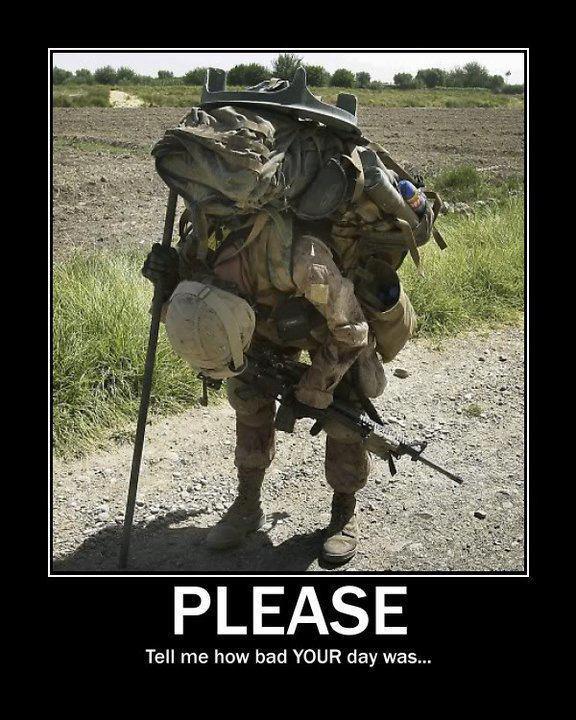
Combat Load “Combat Ready”

What do you carry as a firefighter? Are you one those, that picks at the other guy about how heavy their gear is? Are you combat ready? Are your wire cutters rusted shut? Did you stop carring your bail-out rope?

Death On The Nozzle “Engine LODD”

Could the Nozzle position be more dangerous than 20 or 30 years ago? Why does it seem more firefighters are getting burned and killed with a nozzle in their hands? Did you have an Instructor tell you, no water on smoke?

Please Share your Nozzle Position Close Call and/or Death.

Don’t Hesitate to share links. Looking for Big Input and Shared Experiences.. Look under Close Calls on Home Page for more Pics and Video of another Close Call here in Northwest Florida.The Nozzle Firefighter was burned while making entry through front door of small house. He was burned from Vent Point Ignition.. Video under Close Calls on Home Page..

Mask starting to fail. Short period of flame contact made it impossible to see through lens.

Firefighter burned and transported. Close call of Firefighter assigned to nozzle.
How long will your gear protect you? Have you inspected your gear lately? What kind of hood do you wear? What is the rating on your gear? Do you wear your ear flaps pulled down?

ECFR Firefighter Suffers Facial Burns-Lessons Learned click here

Our Next Generation of LODDs from Live Fire Training

Kevin Story Captain


Who are they: They are all around you and they are graduating from academy’s every day.

What are they: They are our next generation and the future of the fire service. If you are a Company Officer, they are riding behind you. If you are a Chief, they are the Troops you had coffee with this morning.

Why are they going to be LODDs: Because what live fire training is today, is ill preparing them for what they will face once they are riding on the apparatus.

But we have NFPA 1403: Which is part of the problem, as it has watered down fire training (pun intended) to something unrealistic, to the real world of rapidly growing fire conditions we now face.

There was a definitive need for NFPA 1403: that was plainly seen by some of the training events which left you saying that favorite three letter acronym that also works for, Well Trained Firefighters. Training evolutions that were not thought out all the way through no doubt. They were not planned with intent to do bodily harm but had tragic results. But these same departments go to real world fires without killing their Troops.

There is often a more lax command and accountability at a live burn event because, “It’s just a training burn”.  As if the fire and smoke are training fire cooler or smoke training toxic level. That apathetic attitude will most definitely get someone hurt or worse. So to combat this we have tamed our burns down but our fires in the streets are doing the complete opposite. Basically like training and equipping the Troops to fight in the desert and shipping them to the North Pole to fight and hoping for a good outcome.

Today our fire attack is more enhanced than ever before. We have more technical and laboratory information produced than ever before. With all this what we are teaching sometimes does not match our enhancements and the information we have gained. Now it has been awhile since I was on the military training grounds but, even back then we were not taught, go till you feel bullets hitting you and then start shooting.  Still we have firefighters that think you need to feel your ears burn so you do not get to deep. But this is a myth because every time you burn your ears and they heal up they lose feeling. So the next time you will be deeper yet, because you are deadening them every time you burn them.

The “Don’t shoot till you see the whites of their eyes” has long since went away. But we teach exactly that by saying do not open the nozzle till you see fire. The smoke we are passing through to get to that glow is a bullet just waiting for the right conditions to cap the primer. The intensity which it lights will also light fuel behind us there by causing more problems.  Better gear and thermal imaging now enables us to literally fly to the seat of the fire compared to the days of inching forward blindly by brail and feeling that heat at a slower pace. As Newton said “To every action there is always an equal and opposite reaction”. So here is ours, you fly to the seat of the fire and the reaction is it burns your gear off or melts your mask. This is probably not what we are hoping to accomplish.

But we routinely drag our underlings in right up to the fire and open up. This works great in a concrete room, with pallets or hay, but not in room full of hydrocarbon based products with a means for the fire to travel. I have not been to too many residential fires where I found a stack of pallets or hay burning in the middle of the living room or bedroom, excluding acquired structures.

 What I have found is overly stuffed BTU producing rooms that produce extreme fire conditions when the conditions are right. There is a ton of articles with huge amounts of BTU production rates and Heat Rise Rates. All this data is extremely informative and relevant but it boils down to these few things. Attack with as much water as you can be effective with and you have trained with. If you do not train with 2 ½ inch line you are probably not going to have great results pulling 2 ½ on a large volume of fire. Eventually your experience/training might catch up but you will lose a few buildings before you get there and maybe a firefighter or two. I remember reading a report chastising the use of 2 ½ at a residential fire. The reason stated you couldn’t move 2 ½ and be effective. Really, whoever wrote this has not seen some of the firefighters that I have seen move a 2 ½. But I have seen those that cannot advance a 1 ½ either.

When our armed forces are faced with a target a little bigger than they want to deal with up close with a small force, they prep the target from a distance. We can do exactly that, it is called reach of stream! The problem evolving from how we are training in burn building is, flowing water while advancing the line is becoming a lost art form instead of a basic skill.

Awhile back some of my Mentors where blamed for why bad events where taking place. So I went back and looked at videos of those “horrible guys”. I did not see them going in without water or wading in till they just could not stand it anymore and jerking the bail open and hoping the fire went out. These guys worked in busy houses their whole career and never retired until they went to the house the last time. They fought fire aggressively and they were the solution not the problem. They all went home too, because many are all enjoying retirement. Their mentored firefighters are not killing people off at an alarming rate now either. There is too much “Let’s run in and get some of that” mentality instead of “Let’s push aggressively and get all of it”.

Engine companies have to be changing the conditions to better, not just sitting inside and letting conditions simply get worse around them. From the Incident Commanders position, if crews are in the building and conditions are worsening, the I.C. has no choice but to pull the crews out. Put yourself in the I.C boots, they have 2-3 lines capable of 200 G.P.M. each inside a burning structure and conditions are getting worse, you have to wonder. If an Incident Commander or Division officer that can actually see the fire calls me for a progress report at a single family structure, I take that as a clue we are not moving or being effective. The progress of an attacking hose line should be visible from the outside in most structures.

So where is the problem? Better gear, Thermal Imagers, radios in every firefighters coat and people are still getting in trouble and the fires are not going out. The problem is one of the smaller pieces of equipment on the fire ground, the nozzle handle. It is not being opened and the line is not being advanced while flowing. Reach of the stream is not being used. We teach sounding the floor with tools during search. Why not teach structural stability with the stream? A 1 ¾ hand line producing 200 G.P.M. is a 1666 pound a minute hammer. Use the stream and look for kill you structure damage when the stream hits. Think past the moment of the fire going out. When things are heated they expand, when cooled the contract. A heavily involved room has a lot of expanding going on that when you apply a sufficient G.P.M. fire stream you should be causing an immediate switch to things cooling and now contracting in an instant. This is not breaking news to you, I am sure, but when we have trained our Firefighters to always be right up and personal with the burning material in the burn building. So in the streets they get in the room before causing the reversal.

The fire is producing more BTUs than ever before so bigger flow hand lines are being carried by almost every department so what gives. All that flow is worthless if Firefighters do not react according to the situation they face. But how can you expect a firefighter to operate accordingly during an extreme fire event if they have never seen a extreme fire event or applied water during an extreme event. Now given the faster temperature rise of our hotter fires you certainly cannot expect a good outcome if they are scared to death because they have never felt significant heat beyond their own body heat in gear.

Does every live fire training need to be flashover hot, absolutely not. Do we need to put trainees into flashover chambers to operate no, that would get really expensive in gear and S.C.B.A. But a firefighter’s first encounter with Walmart heat should not be at a Walmart fire. It should be in a controlled environment. A Walmart fire is not referring to a fire in a Walmart store. This is a fire that makes you question why you did not go to work at Walmart instead of the hot, black nasty one; I think we may die environment you are currently in. Firefighters need to be trained in this environment enough to know that they can survive. How bad would the U.S. Navy Seals performance be if they trained at the neighborhood heated pool?  Long durations are not needed either. A little goes a long ways because when you encounter that heat you basically have 3 options. Flow water, ventilate if not already done, get out, or combination of the three. Trainees need that seasoned Instructor to say, “Okay when it feels like this, here are your options and if you do not exercise one of these, it will get much worse.” Will trainees get their needed experience at the Academy, no but they should be well trained enough that the Company Officer does not have to tackle them or kneel on them to maintain crew integrity.

Let No Man Say his training let him down. This is a very often repeated statement which is on many Fire Academy walls and in training material. So why when live fire instructors can routinely be heard to tell students, “This is not like the real thing” are we allowing their training to let them down? We often jump on the newest thing, because it is new it has got to be better. Did we try it under those real conditions or close to real? Probably not or that whole left for life and driving all that heat down on us and pity on anyone near but not under the might fog might not have been such a great savior. Attacking the gas is not the root of the problem

No one is going to the fires they used, not exactly breaking news. So where is the experience going to come, realistic training not make believe almost like a fire training.

Many will scream where the safety is if we burn hot. Where is the ability to keep the trainee safe from crawling into the fire and just burning their untrained selves up?

  • Staffed back up lines in place where they will make a difference. Staffed by Firefighters who will say uncle and open them to make a difference.
  • Facilities constructed to produce the desired result of producing a fire to flow water onto with barriers to keep the student out.
  • Burn rooms that have light debris that actually fly’s around producing some of the effect a 200 GPM stream makes happen. Remember the first time you hit sheetrock ceiling with water and it fell. That wasn’t seen in training was it? Probably got your attention though. Eventually you got used to it would have been nice if it was not such a big surprise. Or the fact that when we drive those streams against a solid wall it comes back on you. You can no longer see just from your own water. But you will not learn that in a two or three second blast from a nozzle.

Ladder Driver

Where should the Driver be when aerial is in operation? What type of gear should they be wearing? Should they have a harness on? Should they be packed out? What type of tools should they have available?

Air Packs / SCBA — What options do you like?

Does your driver assist with bottle change and are they ready?

How do you change out and where? How many bottles can you go? How long do they last?

How do you change out and where?  How many bottles can you go? How long do they last?

Air Packs and everything that surrounds them. What type of pack do you prefer? What size bottle do you prefer and why? Do you like the quick connect bottles? Do you like the buddy breathing attachment? There is so much available these days and we should question what makes sense and what does not.

Do you mask up every morning when getting on-duty? Do you check your heads up display? How low before you top off? When is it worth it to top off? Do you pre-connect mask?

Thermal Imager “TIC” Under Utilized

Do you still think it's cool? Have you trained on it lately?

While there is no substitute for real world experience, realistic training is the next best thing. After conducting search training using acquired structures and “live smoke”, there were several lessons learned and reinforced as it relates to entering a fire building and conducting a search while using a Thermal Imaging Camera (TIC). The most obvious of these, is that the majority of firefighters have had little to no formal training in the use of a TIC, and therefore, lack a true understanding of its potential, but more importantly, of its limitations.
There is no doubt that thermal imaging has been one of the single biggest advances in fire service technology in the last 15 years. However, we must remember that it is just another tool in the toolbox, and must be used with caution. While conducting searches, we have always learned to stay low in heat and smoke, with most of us being taught “if you can’t see your feet…get down.” We should not abandon fundamental and sound search tactics while being lulled into a false sense of security by a TIC.
Here are some questions and points to ponder. When searching as a crew or team, which member will carry the TIC? Do you use the TIC to scan the entire room or area? What pattern or method do you use? Do you depend on your TIC to guide you in and out? Are you still maintaining your orientation and exit path strategy using “conventional means”? What happens if your TIC suddenly “dies”, can you find your way out? Are you staying low and using all of your tools to your advantage? What type and size imager do you have, and how do you carry it?

Do you utilize or just carry it? What calls do you use it on?How do you carry? Do you always have it? Do you carry an extra battery on you?How do you carry? Do you always have it?

Get it out and TRAIN ON IT!!  TEST YOUR BATTERIES!!!

How do you carry? Do you always have it? Do you carry an extra battery on you? See how the RIT OFFICER has it Hanging, Ready to go.

Notice how many times the question came up about how and do????

Because so many just LEAVE IT ON THE RIG.

Should your hood & ear flaps be utilized?

What do the ear flaps provide?

Why do FIREFIGHTERS cut their ear flaps out? Why do FIREFIGHTERS leave them tucked up into their helmets? Why do FIREFIGHTERS purposely not utilize PPE? How would the Modesto Firefighters have turned out if they were not wearing all their PPE?

Talk about this with your crew.  Salty is not COOL at the expense of getting the job done without unnecessary injury.

What do you think? Do you have FIREFIGHTERS that cut their ear flaps out and/or do not wear hood?

http://www.youtube.com/watch?v=aNt3BQ2kYgg&feature=relmfu

http://www.modestogov.com/mfd/downloads/docs/Coston_Fire_Final_Report.pdf

Modesto Firefighter spent 53 days in the Burn Unit. Returned to work Ten Months later. How would it have turned out, if He was not wearing his proper PPE?