
PDF Link Below:


Tactical Safety for Firefighters
By Ray McCormack
Improving Your ISO Rating
Your ISO rating could be slipping right out of your hands if you don’t take action to correct it. Your ISO rating should be important to you and every member of the department. Your ISO rating is a good barometer of how effective you are at putting out fires. Your ISO rating is your “Interior Stream Operation”. If you’re not so hot with a nozzle, then your ISO rating will go down in flames and the fire area will go up in flames.
Being part of a solid engine company is not only reassuring, it is the baseline of your extinguishment culture. An excellent engine company operation is not created out of thin air; it comes from dedication and hard work. The firefighters that make up a highly effective extinguishment team, besides having a shared dogged determination to defeat the fire where it lives, will incorporate solid nozzle techniques along with proper hoseline management.
As a friend of mine stated, “You can flow 200 gallons per minute, but if it’s going straight into a corner, it’s not doing much.” So true! The variable to all fire operations is the human element. Taking two similar fires with two different crews may not produce the same outcome. That outcome also varies between firefighters and bosses; however, firefighters and their bosses can not hide. They either accomplish the task or they don’t. They can, of course, make excuses to justify their lack of performance for those that will listen.
The odds that are stacked against a nozzle team can typically be successfully challenged by a reliable flow, rapid engagement and effective leadership. So now you say, we don’t have a lot of fires, and I say that doesn’t get you off the hook. Every aspect of firefighting can be closely replicated in training and with education. If you feel that you need more training, then seek it out. Departments that work to discover their shortcomings and work to resolve them are in tune with the foundational principles of service. Remember that fire drills are not just for schools; they are for fire departments too.
Your personal Interior Stream Operation (ISO) should be deliberate and efficient. You should learn when to open the nozzle and when to shut down. You should understand how to properly hold the nozzle so that your movements are fluid and are performed with the nozzle out in front of you. You must clear any area that you crawl through and understand when the nozzle should be up and when it should be down. You should avoid nozzle drop while advancing and understand that you and your teams skills can make or break the fire. Improving your ISO is harder than making excuses, but the payoff is much more satisfying.
Keep Fire in Your Life

Tactical Safety for Firefighters
Video Killed The Fire Star
By Ray McCormack
Video of fire scenes show us as we are. They are not complementary. They are real. While we all feel better because we would never look that bad, are you sure? Some will aways be poor performers and some will just have a bad day with the video rolling.
What we often see is poor task skills incorporated within a poorly structured attack plan. While some individuals stand out due to various errors, they are often operating within a broken system. So, two problems emerge: firefighter errors and scene disorganization. The bigger of these two errors is improper scene management- a total lack of SOP or SOGs, just Helter Skelter!
The task issue of forcing a door or stretching a line incorrectly can hopefully be overcome by someone who paid more attention to those lessons at the academy. Firefighters all learn skills in training school and hopefully rework the memory muscle at house drills; however, when we witness task errors throughout, we are witnessing dysfunction. Fireground dysfunctionality is not easily solved on scene because the problem goes deep. The problem is the fire goes out and no injuries are encountered and we collectively pat ourselves on the back and nothing improves. For many, there is no need for improvement if these two benchmarks are reached.
Beyond skill drills which make up the foundation of firefighter training, we need to also incorporate fire operations protocol . We need to revisit the fire academy as groups and work on our approach to fires in people’s homes. We need to practice directing the actions of firefighters. We need to have our firefighters not just in bunker gear, but truly ready to work on air. our leader needs to understand that good fireground management starts long before arrival on scene. Remember if you want to look good look practice your act.
In Ray’s class, “Engine Company Errors – The Dirty Dozen”, a lack of SOPs is cited as error number one.
Keep Fire in Your Life
Hard work, passion, and a little ingenuity is all you need to come up with fantastic company level training. You don’t need a big training facility to put on great training, you just need to use some imagination.
This is a prop that the Austin Fire Department in Texas put together for training their members in car removals in swift water rescue situations.

They put a car into a boat launch so that most of the car was submerged, they then used handlines of an engine company and a fire boat to cause the river like effect. This allowed them to preform various removal techniques in easily controllable situations.


Not only does it get your members out doing swift water training but it also gets you out stretching hose, pumping your lines, ropes and knots, medical, setting up your ladder truck, and anything else that you wanted to put into the scenario.


http://www.kxan.com/news/local/austin/first-responders-prepare-for-low-water-crossing-rescues
So get out their and push your training to the next level. A serious “hat tip” to the Austin Fire Department on this training.

Tactical Safety for Firefighters
The Stockholm Department
By Ray McCormack
The Stockholm Syndrome is something people who are held hostage for a period of time can experience. It was named after a group of bank employees were held hostage for six days in Sweden and how, after a time, hostages will often empathize with their captors. Firefighters are no different in how they will defend and support their department even when it’s hard for others to grasp.
A close-up lens is a wonderful thing because it provides an intimate view without a contrasting background. We all have our beliefs on fire attack and the procedural methods to accomplish it. If you look at how a department operates, you will see similar fire attacks, not just because of SOP’s, but because of belief.
If a department changes like the wind, it probably had a weak stand on tactics in the first place. Some are constantly looking for something and ending up with too many options. If you see a department that doesn’t change much, that is not necessary a bad thing. It is just that change often has a lot to prove before it is implemented.
Departments that operate under a system that many progressives would cringe over must realize that they are doing it their way too. They are just as much hostages as the constantly changing department is, but for different reasons.
The first department is subject to constant change while the other is married to routine. The problem with the first system is that they will probably keep changing and adopting all types of tactics creating a vast options menu and a very confused officer core. The second group has no such confusion and while they may appear to some as very legacy, they operate with a broad understanding of capability and uniformity of fire attack and are slow to take on new options.
All will defend what they do, they have no choice. It’s what they believe in. The bigger question is will the first department ever get it straight and when will the second department ever modify? Neither will until they are released from their own captivity.
Keep Fire in Your Life
Hi Lift Jacks are a tremendous tool in our rescue “tool box”, they have a great lift capacity and they have a tremendous amount of lifting/spreading/pulling distance that they can travel. I think that this tool has gotten a bit of a bad rap over the years and I think that allot of it has to do with our over reliance on Air Bags as our primary lifting tool. For me though I feel that the Hi Lift Jack gives much more versatility than allot of people know about and they have tons of applications on the rescue ground.
Pulling Tool
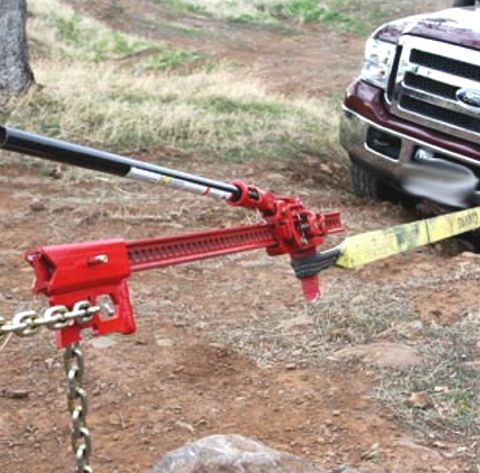
The Hi lift jack can make a great pulling tool as well as a lifting tool; using some chain and shackles it can become extremely useful at pulling or lifting heavy loads also. Several different attachments can be bought to allow you to attach chain to with ease.

Lowering the Center of Gravity and Extending the Reach
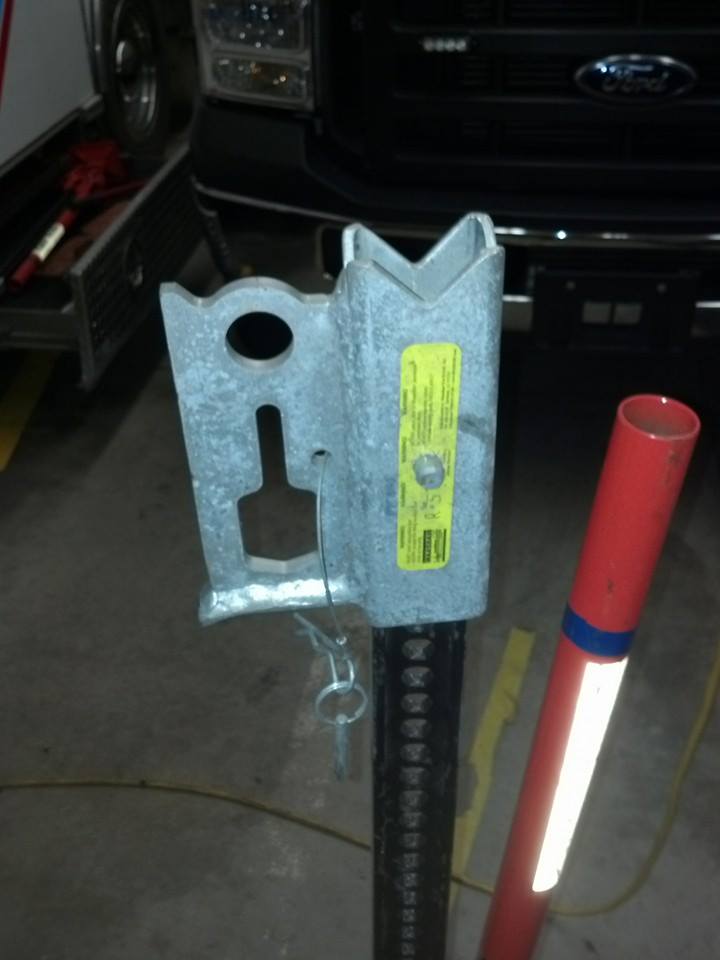
One of the biggest complaints about the jacks is that they can become unstable at height because of the center of gravity rising. One awesome attachment that I have seen is the OJ Sleeve. The OJ Sleeve got its roots from Retired Battalion Chief Ron Zawlocki of the Pontiac, Michigan Fire Department. I first saw it at a Machinery Rescue Class in Howell, Michigan. The design came out of necessity, when you think about it we have a bunch of great options for lifting things that are relatively close to the ground. We have air bags, bottle jacks, hydraulic spreaders, etc…. all these tools are great and provide a tremendous amount of lifting power, but they all have very minimal spreading distance and they can only lift very minimally off the ground with out cribbing. The OJ Sleeve solves the problem of lifting and spreading loads that are beyond 4 ft off the ground… extremely fast!
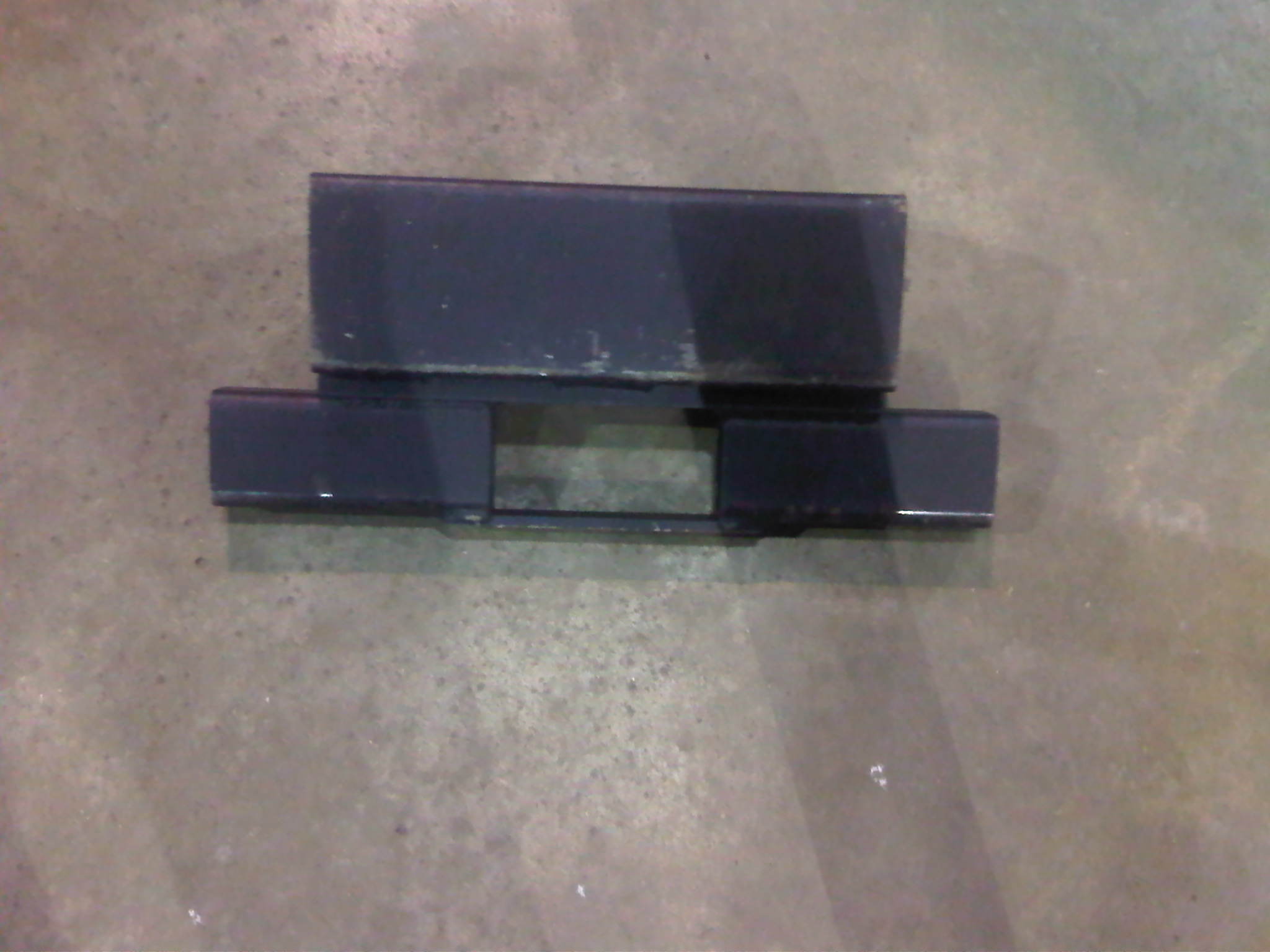
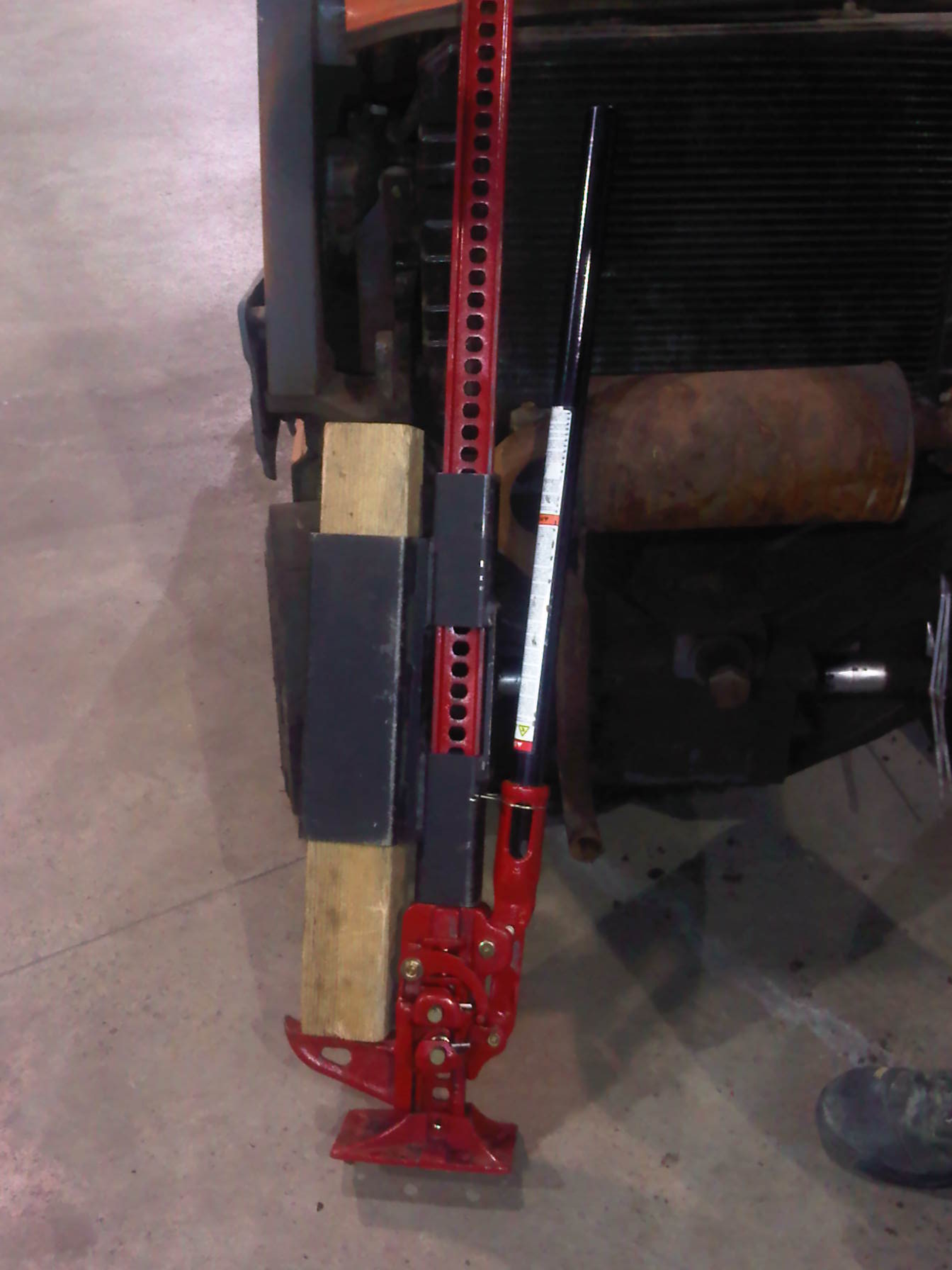
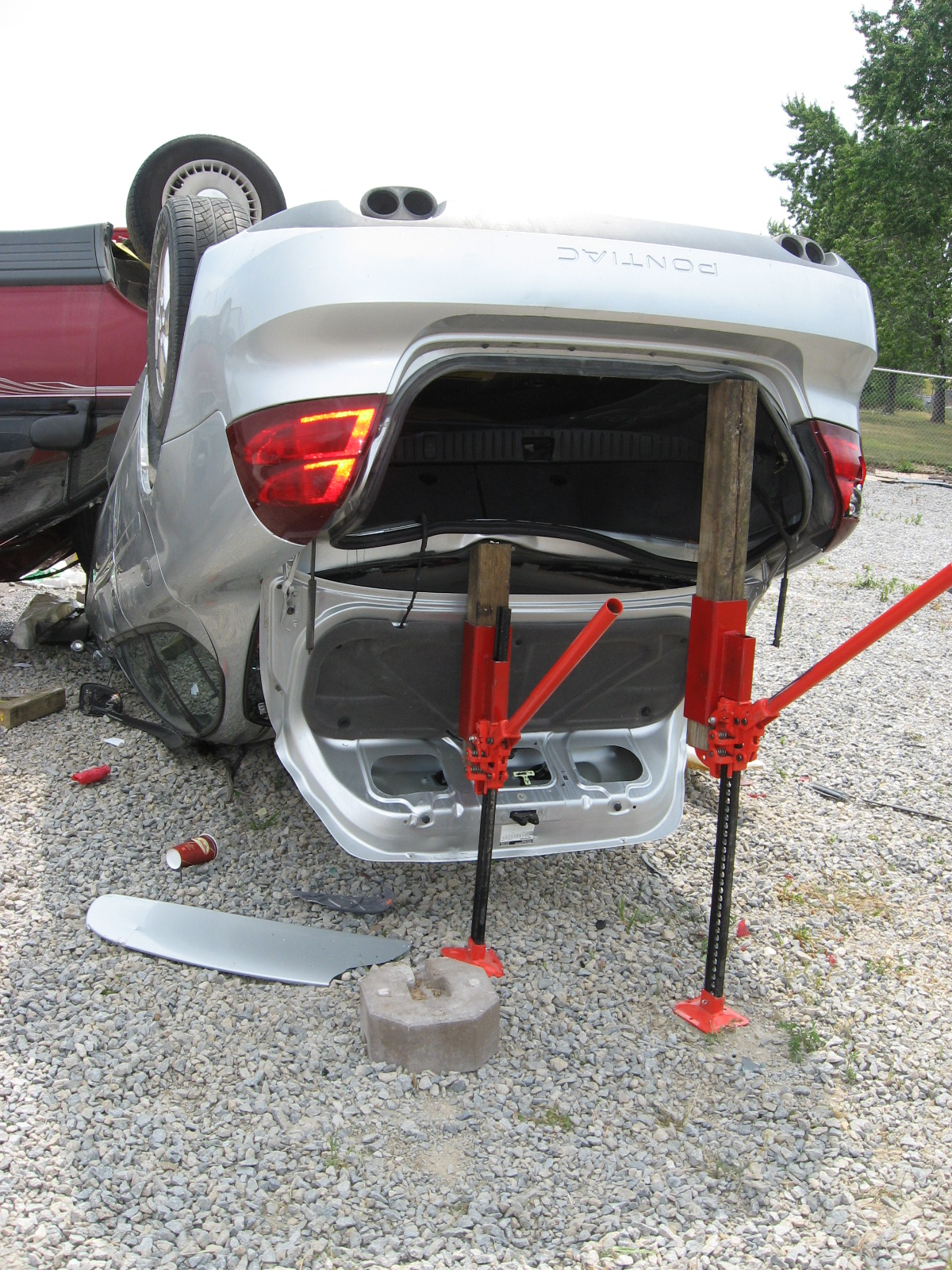
The sleeve is a homemade sleeve and it is made to hold a 4×4 of any length vertically, this makes an awesome lifting post and it keeps the center of gravity in the lifting carriage extremely low to the ground increasing its stability.
The OJ Sleeve has a ton of uses such as:
• Closing the gap without using tons of cribbing
• Lifting things at height
• Pushing
• Stabilizing
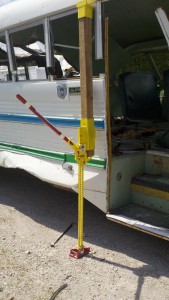


The other great thing about Hi Lift Jacks is that they require no exterior power source other than muscle power. They do not require set up… they are simple and are always ready to work. I also love the fact that they will work in any condition, smoky conditions for RIT, under and around water, etc.
The Hi Lift Jack is a fantastic tool and has tons of uses, so dust them off and get them out of the compartment where they have been for years and train on them…. Use them to

Tactical Safety for Firefighters
No Two Fires Are The Same
By Ray McCormack
Have you heard the phrase, “No Two Fires Are The Same”? It is not true!
There are plenty of fires that are the same. They may not be identical , but they are very much alike. This statement, like others, has taken on a life of its own and, if strictly adhered to and believed, can impact negatively on fireground operations.
Unless your response area contains completely custom one-of-a-kind homes, then your department has experienced some fires that were the same.
While the postal couriers motto talks about rain, snow, sleet and gloom of night never impacting the swift completion of their rounds, the same is not true of the fireground. Time of day, weather, etc. impact us, but the fire’s location within the dwelling type doesn’t vary. A kitchen fire in a ranch in a neighborhood of predominantly ranch style houses is just that, a repeatable similar fire. A second floor rear bedroom fire in a condo among hundreds just like it in a development is the same fire.
The effect on operational safety comes when we firmly believe the statement that no two fires are the same and therefore do not take the time to evaluate our response area to discover the occupancies that are similar and develop SOGs for such building fires.
What happens next is that a lack of SOGs impacts efficient operations and the dispatching of tactics which then must be ordered instead of being intuitive. When everyone is awaiting the most remedial of orders, we will experience delays and delays equal fire growth in this business. Never had a fire that was the same as another? Think again!
Keep Fire in Your Life

By Ray McCormack
There are only two sides to a fire building: the inside and the outside.There are those who want us to stay outside for a variety of reasons. There are those who see us as incapable of making good decisions regarding entry. There are those who fail to truly understand our capabilities employing interior fire attack.
Fire, smoke, occupancy, construction, time of day, troop strength, timing, and water issues are all valid reasons to stay outside and many can be misread or exaggerated keeping you outside. We are all hazard – “check”. We are firefighters – “check”, but wait. There seems to be some difficulty in pulling the interior extinguishment pin for some. If your scales tend to tip toward the outside and you know that it isn’t really necessary, then why would you continue?
Do you feel that the inside of the fire building is too dangerous for your firefighters to operate in? What happens when the exterior option is off the table? What are you going to do then? Are your tactics going to tame it? Have you sat down and figured out what your extinguishment is going to look like?
Are you operating under an assumption that our capabilities don’t include interior success? What is missing from your extinguishment platform that you have trouble handling a bread and butter fire. It can’t be equipment because we all have the necessary hoses and nozzles. Do you believe there is no such thing as a bread and butter fire in the modern age? If so, that is a bad assumption.
To arrive at a burning home and base your operations on exaggerated conditions places most firefighters in a state of paralysis, and that must be fixed so that your people know they can be successful with either option.
Finding the tactics that you need to get extinguishment done is not an unknown, but it may take practice for some. Start by not feeding it unnecessarily and its bite will be less powerful. We need to get our people inside to find the savable and the injured. I know that I want someone coming for me if I’m inside, don’t you?
Keep Fire in Your Life
When declaring an Emergency, you call the word May Day THREE TIMES!! Why Three Times? Because the first two may not be heard for many reasons. Other noise, scanning feature, bad transmission and so on… Calling the May Day is just the START of confirming Command and other Firefighters operating on the Fire Ground truly understand that there is a Firefighter in trouble and needs immediate assistance. Historically, Firefighters that have been in trouble were heard and understood by Firefighters not operating on the fire ground who were listening to radio transmissions. This is another REASON why firefighters not assigned to the incident should monitor radio traffic. Be Pro-Active and Listen, even when your company is not assigned to the BOX! What If you hear something that no one else hears? What if? when you call the May Day, your portable microphone is not transmitting and the words May Day are not being heard, or there are numerous May Days all at once. Then who is tracking all the May Days? There were 9 Firefighters trapped in June of 2007 in Charleston and only one May Day came across/was recorded over the air. There was one Orange button that was activated by Ladder 5. Ladder 5 Driver activated his orange button. The Dispatcher came across and advised Ladder 5 drivers orange button is off. What if? 8 other Firefighters would have activated their orange button early enough? We must STUDY and learn from others before us and try to improve for the FUTURE. Everybody knows how and when to call a May Day, but still so many times the words are not being heard. We continue to train on calling the May Day, but need to also FOCUS on the Orange Button and how much it has to offer. When the ORANGE button is activated an EMERGENCY has been declared until otherwise canceled. With the activation of ORANGE button, it also signals what radio it is. This is only as good as you are at confirming that you’re wearing/using the radio for your assigned seat. Remember Captain 8A in Houston on North Loop, they knew he was in need of assistance and who he was, based on radio identifier. The ORANGE button will work, when the mic will not. The orange button will tell Command, the dispatcher, and other firefighters who is in trouble without ever hearing your voice. So remember how important the ORANGE button truly is and wearing the assigned radio. Do you or your Chiefs have a list of assigned radio numbers and what radio is assigned to what seat? Do the Officers know their crews radio numbers when displayed on the screen? It shouldn’t be Morse Code.
Last thought, can you and your firefighters activate the ORANGE button with GLOVES on? Have you trained on it? Who and how do you reset it? What Channel will the ORANGE button work on? Is Your ORANGE button covered by Radio Strap? Remember the Devil is in the Details? Confirm your Orange button is not blocked by strap and practice using the antenna as a guide for gloved hand and locating ORANGE button.

Improper Placement of Strap.

Proper Placement!!
The VOICE is in the BUTTON!! Do Not Cover the Voice!!
The Orange Button is On Top of Calling the May Day and giving your LUNAR..
FIREFIGHTERS WITH EXPERIENCE?
A new study states that experienced firefighters more analytical under stress than novices The study found that experienced firefighters had a better understanding of the consequences of a bad decision and therefore felt more stressed.
Are you thinking “duh?”
Well-sometimes it takes a STUDY to show us what we already know, or think we know. Sometimes it takes FACT to help us demonstrate to those making the staffing and fiscal decisions of WHY we need, for example, experienced officers leading inexperienced firefighters. Why reduction of staffing, placing company officers in command roles (vs being company officers and staying with their company), placing inexperienced firefighters in “the front seat” and other short cuts” can end up leaving inexperienced firefighters facing critical decisions—decisions they have no experience or ability to make. Firefighters have absolutely been critically injured or killed in the Line of Duty due to the absence of solid, seasoned, trained and experienced officers and senior firefighters. Sometimes that is known as setting people up for failure. Sometimes. READ ON:
http://medicalxpress.com/news/2013-08-experienced-firefighters-analytical-stress-novices.html
What are your thoughts on Acting Officers and everybody just moving up when someone takes off? How important is Staffing? How important is it to comply with NFPA 1710 or going from an IRIT to RIT?
The Above is from www.firefighterclosecalls.com go there to see more on Firefighter Safety and join The Secret List!!


You must be logged in to post a comment.