Stress Inoculation Training

Someone on facebook asked about stress inoculation as it pertains to firefighter training. Here are my thoughts. Feel free to add yours, especially those of you that are fire instructors:

Hose Bed 275

Radio Traffic Blaring, Smoke Detectors Alerting, Bells Ringing and being forced to THINK under Pressure…  STRESS!!!!!!

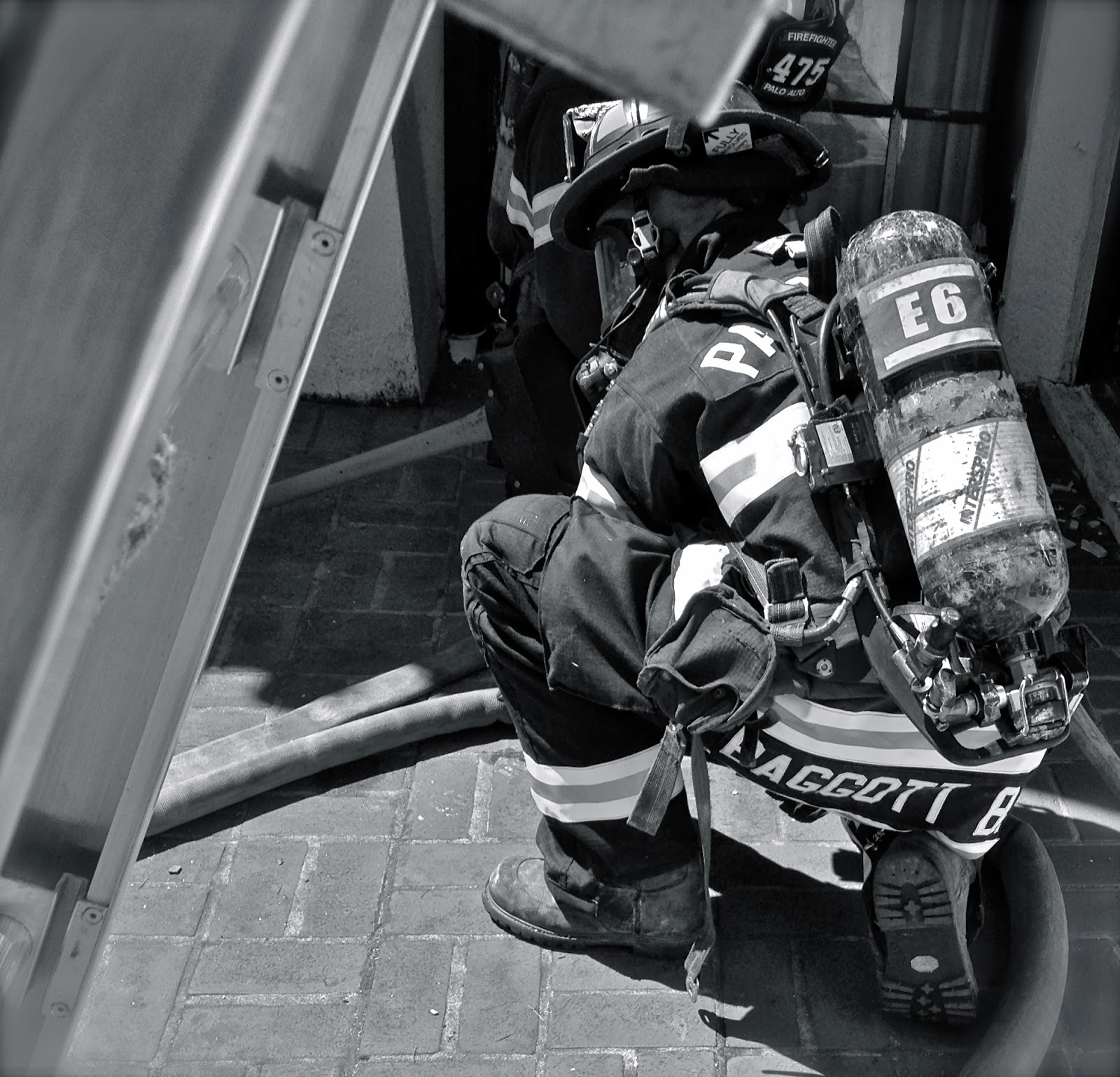
Stress inoculation is extremely important to quality training. There are steps to reaching the point where outside stress is added to the evolution,  though. Stress inoculation prevents the proper uptake of information if someone is learning or training at a beginner or less advanced level. Mastery of basics and advanced tactics and skills must be ensured prior to adding additional stressors to a scenario. For instance,  you wouldn’t teach someone to drive by putting them behind the wheel of a stock car at the Daytona 500.

Stress inoculation is about making a scenario as real as possible within reasonable safety limitations. I say reasonable because we cannot safety ourselves out of training. We do a terribly unsafe job, and only through education and life like, realistic training can we make it safer. It just so happens that when we train, we get better. And getting better makes us safer.

So for stress inoculation to be effective, you have to make the scenario realistic. Our performance under stress is similar to the way an old card-style Rolodex works. We get hit with a stressful situation,  and our brains start flipping through the memories until they hit one that seems similar to the situation at hand. The more of those we have, the better the odds are that we make the right call. If the brain doesn’t have a previous record of the situation, it can sometimes keep flipping for quite a while, making decisions at a slower pace than the situation requires, or just making a call at random just to make a call and stop flipping.

Stress inoculation also helps with off-the wall situations for which no Rolodex card could ever be made in training. Our brains are adaptive. Even if we don’t have a perfect situational example to reference, if our brains are used to making GOOD pressured decisions, they start to make stress itself into a memory. We begin to make better decisions under pressure.

What I have seen NOT work is trying to train proper decision making and tactics without the proper input necessary to really formulate a correct strategy or to correctly apply good tactics. You CAN train stress inoculation in this manner, but be very careful that you don’t confuse decision making under pressure with GOOD decision making under pressure.

-Don’t expect students to imagine anything that they would normally be able to see on scene. We are primarily influenced by what we see when making fireground decisions. Telling a student to imagine a downed power line, a victim, or any number of infinite possible problems is not going to teach them to look for those problems on scene. It only teaches them to go through the motions, and that someone will verbalize all the important stuff.

-Don’t make students practice critical skills out of context. Give them a reason to CHOOSE to use that skill in the scenario.

-Make scenarios challenging,  but not unrealistic. Even if a problem is able to be overcome,  if it is not reasonably possible to encounter such an issue on the fireground,  it serves no purpose. Again,  this goes back to context. When the Rolodex starts flipping, having a contextual reference makes finding the answer much easier for the brain.

-Stress should be individualized as necessary. Not always possible, but even at the same skill level, students are at different stress handling capabilities. Some beginners to a new skill or tactic are extremely good already at handling outside stress. As they master new things, they can handle more stress, and need more stress applied in training to see improvement in their ability to cope with challenges.

By: William Knight

Forcible Entry Drill

Growing up I played lacrosse, not the typical hockey that most Canadian kids played. I was fortunate enough to play at a very high level and had the privilege of playing for some great coaches.  They taught me not only about the game of lacrosse but great lessons about life that I carried over into the fire service. I had one coach that always said “you can’t learn this game in a book; you have to get out on the floor and play the game”. I could not agree more, to truly learn this job aggressive and realistic training along with experience is required. That being said my coach would also say “you want to be great at this game, be a student of the game”, I would see my Coach constantly looking at plays, statistics, equipment, etc. and he was a true student of the game and one of the best players ever to play box lacrosse. The point is that you need the knowledge and the understanding of what you’re doing to go along with your hands on training. We would practice some days until we would literally be throwing up on the floor, we would also spend some days in the class room in front of the chalk board going over plays. This was just as important to the development as us as lacrosse players and a team as going out and throwing the ball around the floor. We are going to look at a quick drill that you can do at your firehouse, this type of drill we call “chalk talk”.

Chalk talk drills are those types of drills that are great for rainy days, these types of drills are good because they often get great discussions going and it allows some of the senior members in the company to pass along their experiences and knowledge to the younger guys.  Some of the best training that I have ever done has been sitting at the kitchen table, around the tailboard of the rig, or sitting in front of a white board talking shop with a warm cup of coffee and the company of some great firemen. Not all training has to be blood, sweat, and tears, here is a good “rainy day” forcible entry drill that you can do with your crew.

To try to add some variety to the training and be able to put the training on I set out to make a series of props that would allow me to do quick, realistic, and optionless forcible entry size up training. I wanted to build a series of magnetic locks that could be stuck onto any regular metal door in the firehouse, out doing building inspections, etc. These locks would look exactly (or as close to it as possible) like their real lock counterparts. I took the basic type locks that me and the crews in my fire department would encounter during a forcible entry operation, these locks included:

  • Key in the Knob Locks
  • Tubular Deadbolts
  • Rim Locks
  • Rim Cylinder Guards
  • Carriage Bolts (drop bars, slide bolts, etc.)

magnetlocks (1)

magnetlocks (4)

magnetlocks (5)

After I narrowed down the most common type locks that I wanted to simulate I made a trip to a local machining shop and had them mill out exact likenesses of a key in the knob lock and a couple of tubular deadbolts, because of the weight associated with making these locks out of metal PVC was used instead. On the backside of the locks a counter sunk hole was drilled and then a heavy duty magnet was secured into place using epoxy. To make the cylinder guards, 10 gauge metal plates were cut to the size of a standard cylinder guard. After the cylinder guards were cut ¼ inch carriage bolt heads were welded on the corners and then magnetic stripping was added to the backside of the guards. Finally, ¼ inch carriage bolts were taken and the threaded rod was cut off the back leaving just the heads, a hole was counter sunk into the back of the carriage bolt head and a magnate was held in place with epoxy. Having these magnet props allows you to gather the crew around any metal door in the firehouse and set up any forcible entry scenario your imagination can dream up. These drills at my firehouse have been invaluable; the guys at the station love it and get very engaged in the discussion about tactics and forcible entry size up.

magnetlocks (2)

magnetlocks (3)

magnetlocks8

The total cost of the magnet props was around $200, but if you are fairly handy or know someone who can use a machining lathe you could probably get them made for a lot less money.

This will be the first article in a series of articles that will give you great training ideas that you can do at your firehouse. If you want to train, you can train.

FF Andrew Brassard

Milton Fire Department- Pumper31


Orlando Fire Conference

Register today!!

orlando fire conf

http://www.orlandofireconference.com/

Rogues- By: Mark vonAppen

Rogues

DCE3

By Mark vonAppen

I believe firefighters can be placed into 3 categories in terms of engagement and leadership.  Generally speaking: 

  • 25% believe in (or pretend to believe in) current leadership staff
  •  35% have no faith in (some of them even hate) the leadership staff
  •  40% could go either way given strong direction and leadership 


Of the 35% that contains the haters, there is a very temperamental subset that can have a profound impact on organizational chemistry. 


The most important firefighters to capture are the rogue leaders, those passionate individuals who, if ignored, can be savage and destructive forces on the team.  Like it or not, your truest leaders are not always the ones who do exactly as they are told or what the book says is right every single time. Your best leaders are not necessarily “yes men”.  The best leaders are functionally intelligent, independent thinkers who scare the shit out of micro-managers.

People gravitate toward strong personalities, not drones who do just exactly what is expected of them and nothing more.  Some of the strongest leaders among us have pushed it right to the edge and some have even gotten kicked off of the team.  Passion is energy; channelling that energy in a way to best suit the needs of the team is the key to overall success.  Some of history’s most influential leaders were agents of evil, I sure-as-hell don’t want them on my team.  In order to bring the rogues home, you must first understand who they are.

Rogues are driven by passion.  Sometimes, your informal, real leaders wind up getting chapped by positional leaders who don’t know what to do with them.  Rogues have a lot of energy and original ideas, because of this they are seen as trouble makers who rock the boat.  They ask questions. They can be found training by themselves or in tight-knit misunderstood groups.  They are often your highest fireground performers because their passion and drive for perfection won’t let them stop training and learning.  They are students of the craft in the truest sense.  The rogue believes that when your job has the potential to take your life, you had best make it your life’s work.  Rogues are intolerant of those who do not understand their drive or respect the craft.

Communication, trust, and confidentiality are the keys to success in any leadership endeavor, but particularly when dealing with the bristly rogue.  Cultivating trust in the firehouse is a must have if we seek an elite level of performance.

Each rogue leader must be engaged individually.  Build trust by treating everyone as unique, and shower them with genuine interest.  Place these fiery leaders in positions where they have the best chance of affecting others with their strength, their passion for the craft.  They must feel that the organization will not quit on them, even when they overstep their bounds.  The deal breaker is if the rogue does harm to the team, this cannot be tolerated.  The obligation of the informal leader is to make every effort to try to contribute to the success of the team.  People must feel that the leader is speaking to them individually even as the leader is addressing an entire  group. Trust and connection must be built and it might take a while.

How do you develop trust?

  • Communication
  • Honesty – most rogues have something in their career that has made them jaded, be honest or you’ll lose them forever
  • Create stakeholders – include informal leaders in the planning process
  • Clearly communicate the plan and then execute it 
  • Mutual exchange – have expectations of the individual and allow them to have expectations of positional leaders
  • Accountability  
  • Patience
DCE31
Rogue leaders can have the greatest influence on the firehouse.  Their infectious, passionate personalities are magnetic.  People are pulled in when they speak and they will emulate their actions. If you are able to rein in their energy for the positive, and are genuinely interested in helping them succeed for the good of all; then you will have an ally for life.  If you double-cross or lie to them you will have an enemy for eternity.  Trust is the biggest factor in getting and keeping rogues engaged.   

Create buy-in at all levels by subscribing to the FULLY INVOLVED BIG4
Do your job 
Treat people right
Give all out effort 
Have an all in attitude

Rogue leaders have loaded dispositions that can either aid in leading the group forward or act to tear the team apart.  The key is taking all of that energy and focusing it in the right direction before it goes sideways from lack of exercise and frustration.  Rogues just need someone they can trust and who truly believes in them.  People follow passion much more readily than rules.  Find your most passionate people and bring them on board.  True progress is made when passion and lofty goals meet planning and expectations.
Be sure to check out Mark’s website : http://mark-vonappen.blogspot.ca/2013/12/rogues.html?m=1

Tactical Safety for Firefighters- Three Mile Bridge

bridge

Tactical Safety for Firefighters
By Ray McCormack

Three Mile Bridge

The fire service is always traveling by bridge as it heads back and forth on topics of concern and popularity and for the passage of new ideas. The direction of the bridge traffic is two way or bidirectional and changes depending upon which debate direction you’re heading in. The bridge comes with two lanes on each side so that slower traffic can keep to the right allowing new ideas to pass on the left.

While we can’t see the other side of the bridge until we have moved at least half way across, it doesn’t mean that when we arrive on the other side we have changed our minds. We must; however, travel the full span of the bridge before we decide if we will turn around and head back or stay.

The debates that rage in the fire service may seem so legacy to some; however, all debate is good. The reason debate is good is because it shows interest. For those that debate, your opinions matter and even with voices raised, ideas can come through. If you debate because you wish to change minds, just make sure that yours is as open as you hope others are.

Cause champions attempt to collate support from like minded thinkers so that the message, often made brief for mass consumption, will be swallowed up more quickly. With campaigns and causes, we need to examine not only their direction, but the final destination they’re headed toward. If you cannot figure out their means and motivation, then maybe you should not climb aboard. Sometimes you will have to look far ahead to see where some ideas are truly headed, and that is not a task for a distracted driver.

Independent thought is often bullied by organizational media control while only giving exception to enablers. Organizations make claims of success and victory that don’t materialize while then attempting to push reconstructed messages for improved results. Bridge traffic can be heavy and slow at times. It is up to the individual firefighter to make sure that when they change lanes or merge with new ideas, they are not just doing so because everyone else is.

When you travel the three mile bridge, the toll is paid in both directions, and while exact change is preferred by many, change agents are there for those that may take something back from the ideas of others.

Have a Tactically Safe Holiday

Keep Fire in Your Life

Orlando Fire Conference

OFC Logo

What a Great Conference at a Great Price. You can attend the Full three day Leadership Symposium for $150, that’s only $50 a day. Chief David Rhodes and Chief Mike Lombardo. Two fire ground Leaders. These two are your Firefighters, Firefighter.

Would Sign Up Soon, before the classes fill up.

2014 Program Details

http://www.orlandofireconference.com

General Session Seminar $50, February 27

0900-1700 at host hotel. Speakers include:
– David Rhodes, Atlanta Fire Department: “Decision Making”
– Paul Capo, Clearwater Fire Department: “When Things Go Bad”
– Jay Bettencourt, Asheville (NC) Fire Department: “Lessons Learned from a LODD”

Hands-On-Training $285, February 28 – March 1

Price includes admission to the February 27 General Session, locations TBA, lunch provided. Courses Offered:
– Air Consumption & Emergency Survival (A.C.E.S.): 16 hours
– Heavy Rescue: 16 hours
– RIT: 8 hours
– Advanced Engine Operations: 8 hours
– Fire Fundamentals: 8 hours
– Vertical Fire Attack: 8 hours
– Truck Company Operations: 8 hours
– Vent, Enter, Search: 8 hours
– Fireground Survival: 8 hours

Leadership Symposium $150, February 28 – March 1

Price includes admission to the February 27 General Session. Speakers Include:
– Mike Lombardo, former Fire Commissioner, Buffalo FD
– David Rhodes, Atlanta FD
– John Miller, Fire Chief, Orlando FD
– Jimm Walsh, Division Chief, Winter Park FD
– Jeff Day, District Chief, Orlando FD
– Paul Capo, Lieutenant, Clearwater FD
– Sean Gray, Lieutenant, Cobb County (GA) FD

March 1, 2013: Fire Up The Night Block Party

Events TBA

OFC Logo

** LOOKING FOR ODP 2025? READ & CLICK LINK 👇 ** PPA Report from the North Las Vegas Fire Department

**** LOOKING FOR ODP 2025 ? CLICK THIS HYPERLINK, YOU’LL BE REDIRECTED, SOME EXTRA LETTERS GOT ADDED ONTO THAT TEXT WE SENT OUT THIS MORNING ***** 

Attached is a report from the North Las Vegas Fire Department, be sure to download it and read it.

PPA_REPORT

ppv

Video:

What are your thoughts on PPA?

Does your department use it?

Tactical Safety for Firefighters- It’s About Nozzle Reach, Not Stream Reach

tacsafety1

Tactical Safety for Firefighters
By Ray McCormack
It’s About Nozzle Reach, Not Stream Reach

While stream reach gets all the attention, and most of it well deserved, it can fool you into stretching short. Stream reach does not equal extinguishment. Nozzle reach equals extinguishment.

While the ability to hit distant fire by incorporating the reach of the stream is a common fire attack method, we need more. Those that use transitional attack often fall short of final extinguishment and extending fire because they use stream reach instead of nozzle reach as their stretch criteria.

Because not every fire exists in a three sided alley where stream reach is the only factor we might need, nozzle reach and mobility for placement at the seat of the fire is what is needed at the majority of structural fires. The reach of the stream used to attack the fire will typically run from far away to up close. However if you concentrate on stream reach only, you will be good at inline extinguishment only.

We need to realize that the nozzle needs to be able to access all areas that the hoseline was stretched to cover. Hoseline stretches must cover the fire area with the nozzle; not stream reach. We must not only have the capability to hit a fire in a room, we must have enough line to enter and move to any spot in that room with the nozzle. This is why hoseline estimation and line support are so important at a fire. To almost have enough line to reach the fire doesn’t work. We must be able to get close to the fire area and inside the fire area to complete extinguishment and battle extension.

Including stream reach into your extinguishment plan is fine for exterior fires and fires you don’t plan on getting up close and personal with at the moment; however, when you stretch a line inside to extinguish the fire at its base and cover extension, you need that nozzle right there so that you are maximizing your protection and extinguishment capability. Knowing your streams scrub area is important, but it is not enough to finish the job. Nozzle reach within the fire area is king. The line needs to be long enough so that it can rapidly move to where it is needed, and many times that includes more than one hot spot.

When you estimate your hose stretch, do it for what you will need inside the building. Do not estimate your hose stretch on outside access and stream reach. Hoseline support becomes important especially when a transitional approach is used because that charged line will now have to be repositioned to the interior; however, line support will not do you much good when the stretch is short because the estimate was incorrect. It is always improves your tactical safety when you anticipate the need for more hose so that the nozzle can go wherever you need it to go inside the building.

Keep Fire in Your Life

Photo Barry McRoy

Stretching Responsibly- Jim Allen ECFR Engine 3

Hose Bed 025

STRETCHING RESPONSIBLY 
 
    As every firefighter has probably been informed, the correct stretching of the attack handline is of critical importance. The incorrect stretching of a handline, should be immediately noticed and corrected by a firefighter on scene. Anyone who witnesses a line being stretched incorrectly, HAS THE RESPONSIBILITY to correct the nozzleman after the fire.
    There are many aspects to be considered when stretching; however, this discussion is about the correct way to finish the stretch. The nozzle firefighter will stretch, flake the line, and place the nozzle at the door; these three aspects are correct, but they do not complete the stretch. It is of vital importance, after placing the nozzle, that the nozzleman bring the first fifty foot coupling to the door. When the coupling and the nozzle are at the door; fifty feet of hose is available, to ease in maneuverability and to prevent the coupling from getting caught on obstacles in the front yard. Fifty feet of hose will typically reach all the rooms, in common style homes.
    If you observe a line being stretched incorrectly, or a nozzle team preparing to enter, without the fifty feet (working length) at the the door, YOU NEED TO CORRECT IT AT THAT MOMENT. Take the time to get the coupling in the correct place; this will help to insure the nozzle team is not delayed in reaching the main body of fire. Things to consider with a delayed hose team are: (1) fire will travel towards the door the team entered, increasing damage and fire intensity ; (2) conditions inside worsen for firefighters and possible victims ; (3) instead of backing up the nozzleman, searching, or checking fire conditions- the backup man is now tasked with mitigating unnecessary problems.
Hose Bed 578
   If you witness an incorrect stretch, you need to speak to the nozzle firefighter and explain the mistakes. We have the job of holding each other accountable. I see two common problems on this job today: (1) Some firefighters will not take responsibility when they are wrong ( “it is someone else’s fault”). (2) Some firefighters are afraid or unwilling, to correct someone for a mistake. You need to be an adult, when you screw up- step up. No one has a right to say one word about something that is wrong, if they are not willing to say it to the person who is doing wrong.
Firefighter Jim Allen
Escambia County Fire Rescue
Engine 3

Tactical Safety for Firefighters- A Sacred Bond

tacsafe2

A Sacred Bond

Tactical Safety for Firefighters
By Ray McCormack

While the fire service tries to figure out how much firefighting it can stand and which line to pull, there is a heavier burden to bear and that is commitment-the commitment of protection of your fellow firefighters while attached to a hoseline. There is a sacred bond between an engine crew and the firefighters they protect. This bond is sacred and must not be broken.

Any fire can challenge your crew beyond what you thought possible. You must work at developing challenges in the training phase so that when the reality phase kicks in, you are prepared. For those that believe all extinguishment issues are solved through the looking glass, please take a deeper look. Your people must also be morally tough so that when the chips start to fall, they can throw up a temporary shore, at the very least, for those who might otherwise be trapped.

When the bond snaps, we need to know why. There are few things tougher to do than hold your position at some fires, but hold you must. An engine company provides protection and saves lives. When the bond breaks, the repair may never come. Keep Your Bond Sacred

Keep Fire in Your Life