Interior Attack “DICERS”

D I C E R S Is a fire extinguishment model utilizing interior tactics to extinguish fires.

Taxpayer 98 ventilation horizontal2

D I C E R S – V O

D – Detect  – Detect the location of the fire
I –  Isolate – Isolation of the fire area
C – Confine – Confinement of the fire.
E – Extinguish – Extinguishment of the fire.
R – Rescue – Rescue of those effected by the fire and smoke.
S – Search – Search of the fire area and adjoining spaces.

V – Ventilation – Ventilation coordinated from within and as needed.
O – Overhaul – Overhaul of the fire area for hidden extension.

D I C E R S is a fire extinguishment model utilizing interior tactics to extinguish fires.

D I C E R S lays out the fireground with task components that are directed at operations within the interior of the fire building based on best practices and recent fire research findings from UL and NIST. They are the principle practices used by the fire service to stabilize a fire scene and save lives.

The tactical and strategic components of D I C E R S should be accomplished in an order that allows for the greatest success of the remaining parts. The six primary action components, Detect, Isolate, Confine, Extinguish, Rescue and Search are implemented in conjunction with a fundamental understanding of the importance of an ongoing scene size up to accomplish our strategic goals.

Your actions based upon the fires extent and location within the structure, utilizing ventilation disicipline and entry air management all impact our ability to obtain complete extinguishment and save lives.

Detect
The first step on any fire scene is to detect the locate the fire. Hoselines can not be placed correctly if we haven’t located the fire. Once that is accomplished using verbal and visual informational cues we can move on to the next step.

Isolate
To isolate the fire area is to define it and set it apart from other areas not involved in fire. This comes from the ongoing and multiple perspective size up. Where is the fire and where will it extend. This is where our resources need to be placed.

Confine
Confinement of a fire may take place utilizing objects within the fire area such as doors or tools such as curtains. The confinement of a fire allows for additional actions to take place along with limiting air flows to the fire. Water can also be utilized to confine the fire, the spread of fire and reduce high heat levels.

Extinguishment
Extinguishment on the inside of the fire area is typically obtained using handlines. High flow rates are critical so that stream reach and penetration are maximized as well as cooling any area with extreme temperatures. Interior hoseline extinguishment techniques must be understood along with proper hoseline management, coordinated ventilation and air control techniques. Complete interior fire extinguishment allows for the establishment of additional operational staging areas for expanded search and rescue operations and provides rapid event stabilization.

Rescue
Rescue is a function of firefighting that can often place firefighters in positions without direct hoseline protection. Under those types of conditions firefighters must plan their entry and exit as they move about. Rescuers and searching firefighters must be cognizant of methods that can assist them with completing that mission such as isolation, along with entry air control. These practices provides additional safeguards for rescue in the form of shielding and additional time.

Search
Search is conducted utilizing both primary and secondary postures. These search benchmarks may or may not be attainable at all fires as quickly as we would like however search is a core fireground function and must be carried out when structural stability allows. The primary search is often done concurrent with extinguishment or just after and may at times be delayed.  Secondary search is preformed post fire extinguishment so only building stability or some other encompassing hazard would interfere with completion of the secondary search.

Ventilation
Ventilation of the fire area must be coordinated with extinguishment and or rescue and search, it must be communicated with interior teams. Ventilation may be horizontal or vertical or a combination of both. Improper ventilation however can cause unwanted fire growth, anti ventilation may also be utilized initially, until knockdown, or during windy conditions.

Overhaul
Overhaul must be preformed at all fires. Open up along side, above, or below any fire you believe may have extended. We must be through when we overhaul, while minimizing unnecessary damage. Good overhaul allows the fire department to leave the scene stabilized and confident that the fire is out.

D I C E R S completes the fireground mission as it relates to searching for victims, rescuing fire victim and those trapped, and complete extinguishment of the fire within the structure. Not all fires will be fought the same way however these components are the foundational concepts of firefighting operations inside a structure. Utilizing both sound firefighting tactics and scientific findings for complete extinguishment.

The following is taken from the IFSFI – International Society of Fire Service Instructors web site.

DEFINITIONS & CONCEPTS
Door Control – The process of ensuring the entrance door providing access to the fire area is controlled and closed as much as possible after teams enter the structure. Steps must be taken to prevent the door from locking behind the entering members. By controlling the door, we are controlling the flow path of fire conditions from the high pressure of the fire area towards the low pressure area on the other side of the door. Door control also limits fire development by controlling the flow path of fresh air at the lower level of the open door towards the seat of the fire.

S.L.I.C.E.R.S.– Slice is a Fire Attack Mode tactic used to reduce temperatures inside a building prior to entry by firefighting personnel for extinguishment or rescue

Now you have D I C E R S and SLICERS

By Ray McCormack

Keep Fire in Your Life

Forcible Entry Drill

Growing up I played lacrosse, not the typical hockey that most Canadian kids played. I was fortunate enough to play at a very high level and had the privilege of playing for some great coaches.  They taught me not only about the game of lacrosse but great lessons about life that I carried over into the fire service. I had one coach that always said “you can’t learn this game in a book; you have to get out on the floor and play the game”. I could not agree more, to truly learn this job aggressive and realistic training along with experience is required. That being said my coach would also say “you want to be great at this game, be a student of the game”, I would see my Coach constantly looking at plays, statistics, equipment, etc. and he was a true student of the game and one of the best players ever to play box lacrosse. The point is that you need the knowledge and the understanding of what you’re doing to go along with your hands on training. We would practice some days until we would literally be throwing up on the floor, we would also spend some days in the class room in front of the chalk board going over plays. This was just as important to the development as us as lacrosse players and a team as going out and throwing the ball around the floor. We are going to look at a quick drill that you can do at your firehouse, this type of drill we call “chalk talk”.

Chalk talk drills are those types of drills that are great for rainy days, these types of drills are good because they often get great discussions going and it allows some of the senior members in the company to pass along their experiences and knowledge to the younger guys.  Some of the best training that I have ever done has been sitting at the kitchen table, around the tailboard of the rig, or sitting in front of a white board talking shop with a warm cup of coffee and the company of some great firemen. Not all training has to be blood, sweat, and tears, here is a good “rainy day” forcible entry drill that you can do with your crew.

To try to add some variety to the training and be able to put the training on I set out to make a series of props that would allow me to do quick, realistic, and optionless forcible entry size up training. I wanted to build a series of magnetic locks that could be stuck onto any regular metal door in the firehouse, out doing building inspections, etc. These locks would look exactly (or as close to it as possible) like their real lock counterparts. I took the basic type locks that me and the crews in my fire department would encounter during a forcible entry operation, these locks included:

  • Key in the Knob Locks
  • Tubular Deadbolts
  • Rim Locks
  • Rim Cylinder Guards
  • Carriage Bolts (drop bars, slide bolts, etc.)

magnetlocks (1)

magnetlocks (4)

magnetlocks (5)

After I narrowed down the most common type locks that I wanted to simulate I made a trip to a local machining shop and had them mill out exact likenesses of a key in the knob lock and a couple of tubular deadbolts, because of the weight associated with making these locks out of metal PVC was used instead. On the backside of the locks a counter sunk hole was drilled and then a heavy duty magnet was secured into place using epoxy. To make the cylinder guards, 10 gauge metal plates were cut to the size of a standard cylinder guard. After the cylinder guards were cut ¼ inch carriage bolt heads were welded on the corners and then magnetic stripping was added to the backside of the guards. Finally, ¼ inch carriage bolts were taken and the threaded rod was cut off the back leaving just the heads, a hole was counter sunk into the back of the carriage bolt head and a magnate was held in place with epoxy. Having these magnet props allows you to gather the crew around any metal door in the firehouse and set up any forcible entry scenario your imagination can dream up. These drills at my firehouse have been invaluable; the guys at the station love it and get very engaged in the discussion about tactics and forcible entry size up.

magnetlocks (2)

magnetlocks (3)

magnetlocks8

The total cost of the magnet props was around $200, but if you are fairly handy or know someone who can use a machining lathe you could probably get them made for a lot less money.

This will be the first article in a series of articles that will give you great training ideas that you can do at your firehouse. If you want to train, you can train.

FF Andrew Brassard

Milton Fire Department- Pumper31


Orlando Fire Conference

Register today!!

orlando fire conf

http://www.orlandofireconference.com/

Special Operations Training Ideas

When dealing in fire department Special Operations, we must constantly be thinking outside the box when it comes to new innovative training ideas that push our boundaries and keep our heads where they need to be. It is tough sometimes to come up with new ideas that will stimulate and challenge our members. Below are a couple of easy drills that you can do at your firehouse that will keep your guys on their toes and get them thinking.

Impalement on Rope

miltonrope5

An ironworker slips and falls impaling himself 6 stories up….. the only way to access him…. rope rescue.

Nothing like ramping up a drill you have done 1000 times! Standard pick off’s can sometimes become a “going through the motions” drill for good crews, it is important to constantly push your members to the next level on the training ground…. an easy way to do that with pick off’s is to add new elements to it. Adding new elements/challenges will push your members out of their comfort zone and push their capabilities to the next level.

miltonrope4

An impalement on rope is a great way to push it to the next level. Some issues that you can come across while doing this are:

  • Will the Rescue Diaper/Yates Harness/LSP fit on the patient with the impalement in the way? A good chance to get away from using that “one way” that we always do!
  • What cutting tool are you going to use?
  • How are you gonna get tools to the rescuer?
  • How are you gonna handle blade or battery changes?

This drill can be done with several different types of metals that will require different cutting tools to be used.

miltonrope3


Confined Space Cutting and Tool Usage

This one was passed along by Lt. Grant Light from Cincinnati Heavy Rescue 9.

When talking about machine rescue or collapse rescue we are forced to use tools and equipment in tough and awkward positions, this drill is all about teaching members to use our cutting tools in these awkward positions in spaces where it is tough to see and move.

fridge1

The drill is an easy one. Pay attention when you are out in your first due for anyone throwing out a fridge, freezer, stove, etc. Place the appliance at the end of a small piece of corrugated tubing and ratchet strap the appliance to the end of the tube so that it does not move.

Now you can use as many different cutting tools as you can to make the hole large enough to pass a rescuer through. To make the drill even more difficult you can stick metal or other stuff inside the appliance that will have to be cut.

fridge3 fridge5 fridge6 fridge7 fridge9

Mini Shoring for Collapse Rescue

Collapse rescue can be very costly, especially when it comes to training and drilling with your crew. Lets be honest not many departments have the luxury of being able to go out and build full size collapse rescue systems out of full dimensional lumber on a monthly basis.

cfd28 cfd27

An easy way to still be able to drill, and keep this stuff in your guys heads is to build mini version of these shoring systems. You can use just regular lumber that you have laying around or you can buy actual to scale model wood from hobby shops.

This will give you the opportunity to work out load calculations, angles, nail patterns, etc.

cfd30 cfd29

Remember that this does NOT in anyway replace your standard collapse training, this is simply a quick 1 hour refresher drill to keep this stuff fresh in everyone’s mind.

cfd26 cfd25

Just a couple small ideas that can help keep your crew on their toes!

Till next time, training is everything!

Andrew Brassard

Milton Fire Department

Pumper 31


Orlando Fire Conference

OFC Logo

What a Great Conference at a Great Price. You can attend the Full three day Leadership Symposium for $150, that’s only $50 a day. Chief David Rhodes and Chief Mike Lombardo. Two fire ground Leaders. These two are your Firefighters, Firefighter.

Would Sign Up Soon, before the classes fill up.

2014 Program Details

http://www.orlandofireconference.com

General Session Seminar $50, February 27

0900-1700 at host hotel. Speakers include:
– David Rhodes, Atlanta Fire Department: “Decision Making”
– Paul Capo, Clearwater Fire Department: “When Things Go Bad”
– Jay Bettencourt, Asheville (NC) Fire Department: “Lessons Learned from a LODD”

Hands-On-Training $285, February 28 – March 1

Price includes admission to the February 27 General Session, locations TBA, lunch provided. Courses Offered:
– Air Consumption & Emergency Survival (A.C.E.S.): 16 hours
– Heavy Rescue: 16 hours
– RIT: 8 hours
– Advanced Engine Operations: 8 hours
– Fire Fundamentals: 8 hours
– Vertical Fire Attack: 8 hours
– Truck Company Operations: 8 hours
– Vent, Enter, Search: 8 hours
– Fireground Survival: 8 hours

Leadership Symposium $150, February 28 – March 1

Price includes admission to the February 27 General Session. Speakers Include:
– Mike Lombardo, former Fire Commissioner, Buffalo FD
– David Rhodes, Atlanta FD
– John Miller, Fire Chief, Orlando FD
– Jimm Walsh, Division Chief, Winter Park FD
– Jeff Day, District Chief, Orlando FD
– Paul Capo, Lieutenant, Clearwater FD
– Sean Gray, Lieutenant, Cobb County (GA) FD

March 1, 2013: Fire Up The Night Block Party

Events TBA

OFC Logo

** LOOKING FOR ODP 2025? READ & CLICK LINK 👇 ** PPA Report from the North Las Vegas Fire Department

**** LOOKING FOR ODP 2025 ? CLICK THIS HYPERLINK, YOU’LL BE REDIRECTED, SOME EXTRA LETTERS GOT ADDED ONTO THAT TEXT WE SENT OUT THIS MORNING ***** 

Attached is a report from the North Las Vegas Fire Department, be sure to download it and read it.

PPA_REPORT

ppv

Video:

What are your thoughts on PPA?

Does your department use it?

Tactical Safety for Firefighters- A Sacred Bond

tacsafe2

A Sacred Bond

Tactical Safety for Firefighters
By Ray McCormack

While the fire service tries to figure out how much firefighting it can stand and which line to pull, there is a heavier burden to bear and that is commitment-the commitment of protection of your fellow firefighters while attached to a hoseline. There is a sacred bond between an engine crew and the firefighters they protect. This bond is sacred and must not be broken.

Any fire can challenge your crew beyond what you thought possible. You must work at developing challenges in the training phase so that when the reality phase kicks in, you are prepared. For those that believe all extinguishment issues are solved through the looking glass, please take a deeper look. Your people must also be morally tough so that when the chips start to fall, they can throw up a temporary shore, at the very least, for those who might otherwise be trapped.

When the bond snaps, we need to know why. There are few things tougher to do than hold your position at some fires, but hold you must. An engine company provides protection and saves lives. When the bond breaks, the repair may never come. Keep Your Bond Sacred

Keep Fire in Your Life

Swift Water Rescue Training

Hard work, passion, and a little ingenuity is all you need to come up with fantastic company level training. You don’t need a big training facility to put on great training, you just need to use some imagination.

This is a prop that the Austin Fire Department in Texas put together for training their members in car removals in swift water rescue situations.

swiftwater2

They put a car into a boat launch so that most of the car was submerged, they then used handlines of an engine company and a fire boat to cause the river like effect. This allowed them to preform various removal techniques in easily controllable situations.

swiftwater3

swiftwater1

Not only does it get your members out doing swift water training but it also gets you out stretching hose, pumping your lines, ropes and knots, medical, setting up your ladder truck, and anything else that you wanted to put into the scenario.

swiftwater5

swiftwater4

http://www.kxan.com/news/local/austin/first-responders-prepare-for-low-water-crossing-rescues

So get out their and push your training to the next level. A serious “hat tip” to the Austin Fire Department on this training.

Rope Rescue Edge Pro

Edge protection is a vital piece of the rope rescue puzzle but it is often overlooked or done improperly. Over the last 15 years of teaching rope rescue and working for a department that gets our fair share of high angle calls I have used almost every type of edge protection out there… most leave little to be desired.

Now their is a difference in wether you are doing a rope rescue in a urban setting (off of a crane or off an apartment building) or weather you are operating in a wilderness setting. If you are working in an urban setting the rope protection is fairly easy, a couple small rollers and you are set. But in a wilderness setting it can be slightly more difficult, the rope has several different rocks, tree roots, etc. that it can pass over. Several years ago I was shown a homemade version of edge protection that is still the best I have used to date.

caver11

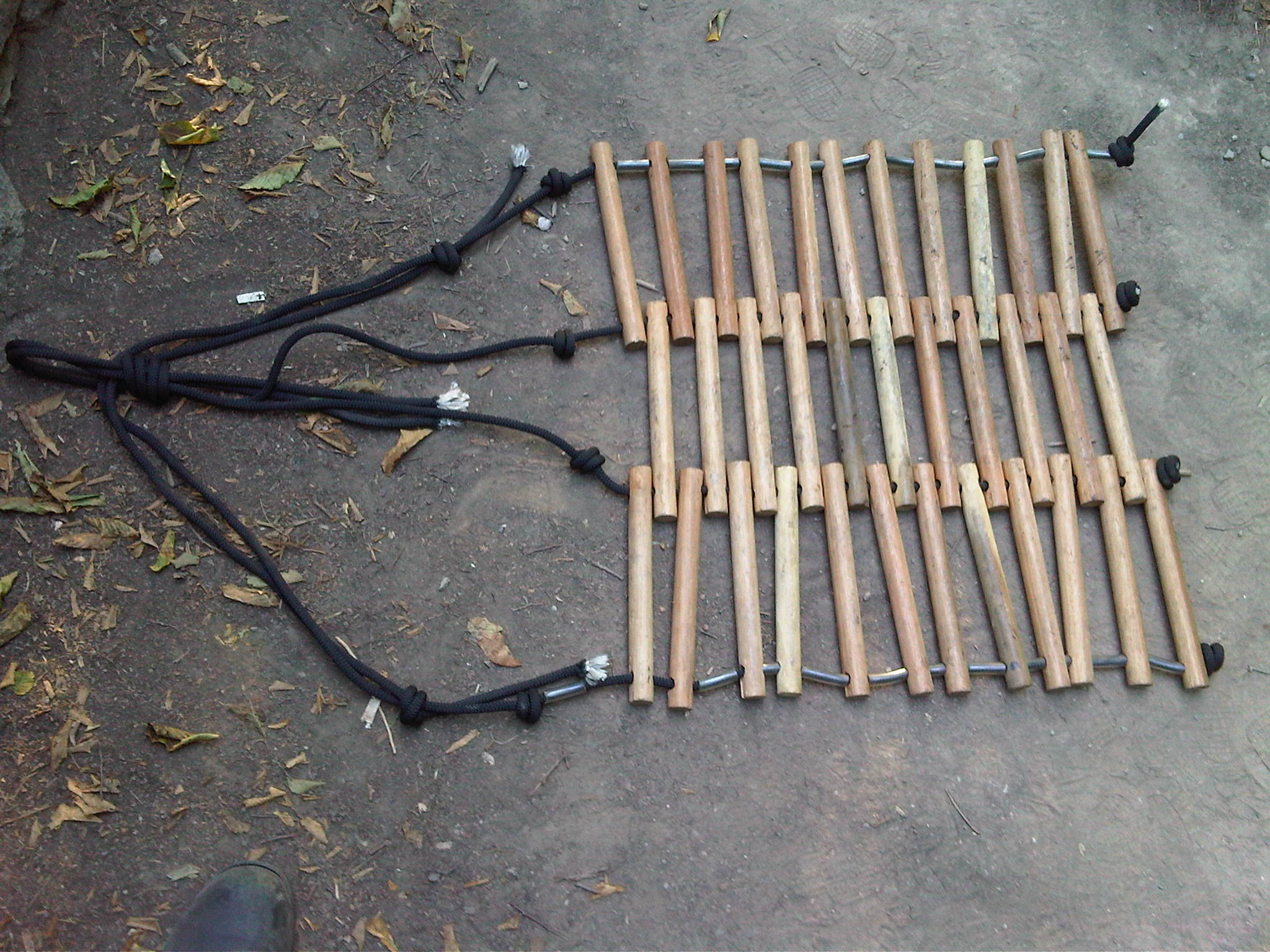
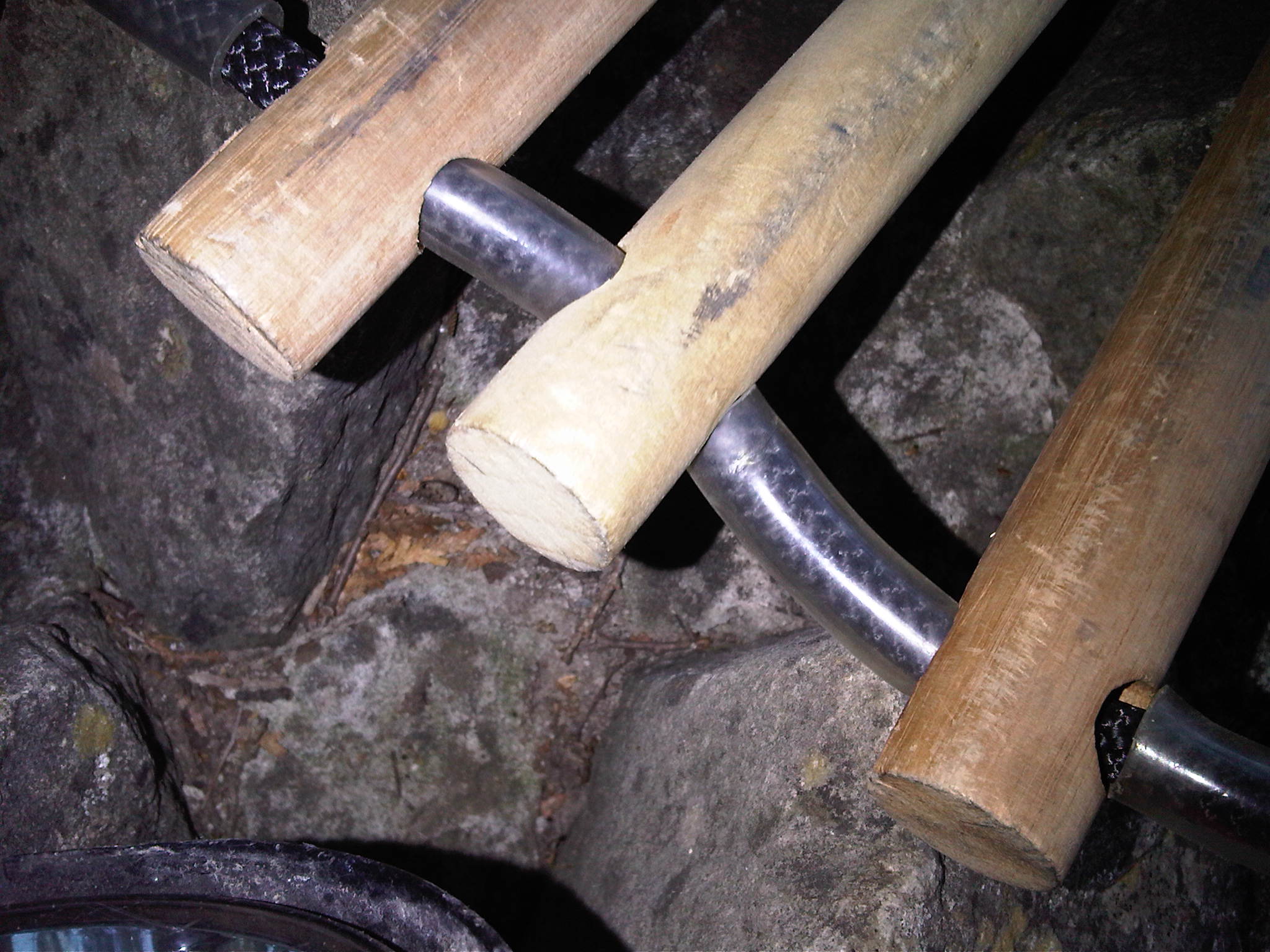
The edge protection is made using small diameter wood dowels that are strung together with some old 6 millimeter cord. The dowels are cut to length, drilled, sanded and then they are ready to be assembled. Small sections of clear water pump tube can be used as spacers on the ends to keep the dowels spaced.

caver23

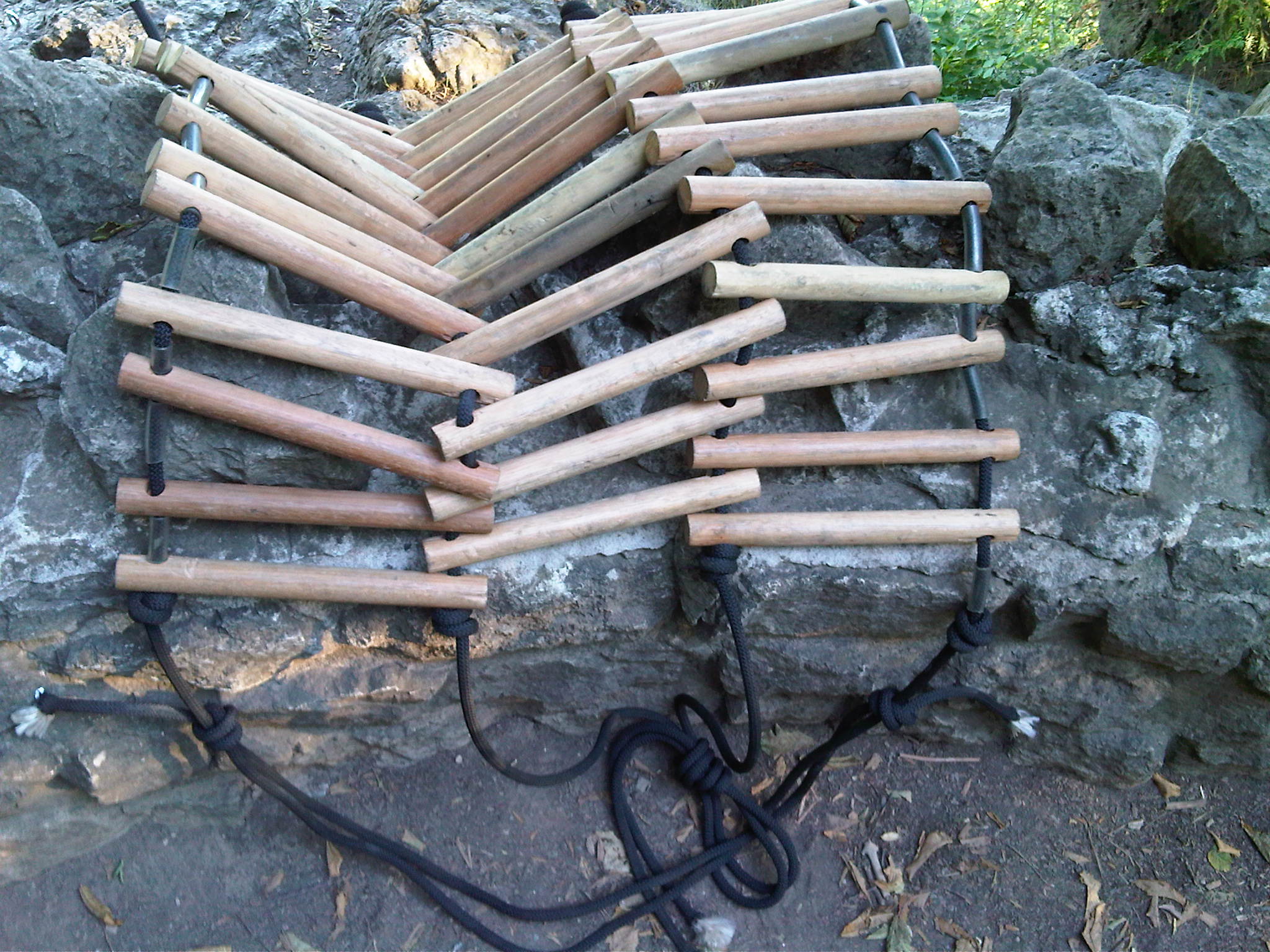
Once the edge protection has been made and it is placed on the rocks you will see how it can bend and be manipulated into the small cracks and forms to the shapes of the rocks. It makes a perfect “valley” for the rope to travel through, and you don’t have to worry about the rope wrecking your edge pro due to friction or sharp rocks.

caver1

The homemade edge pro folds up easily and is carried in our rope rescue bags, it weighs a little more then some commercially sold edge pro but I feel the extra pound is well worth the trade off.

roperescue1

The edge pro can also give you some added footing if the edge is slippery or there is the potential for loose ground. The whole edge protection cost about $20, which is well below the average cost for some edge pro.

Hand Stuck in Paper Shredder

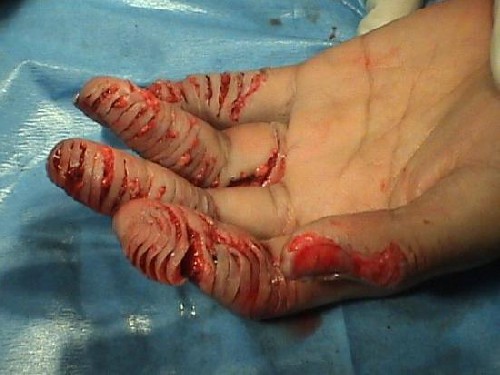
Accidents happen and people always seem to find new ways of injuring themselves. I was doing some research for a training drill I was going to do with my crew when I came across an interesting extrication scenario, when I looked into it further I was amazed at how often it actually happens. The scenario was a person who got their hand stuck in a paper shredder. I happens more than you would think! People attempting to clear out paper jambs without turning the machine off is the leading cause or entrapment but I was also surprised to find that woman with long finger nails was another major cause.shredder

If we respond to a call like this there are obviously some things that we need to keep in mind, insuring that the machine is turned off and unplugged is going to be paramount… but insuring that the machine cannot be re plugged in by accident is also going to be a priority. This can be accomplished a couple different ways:

1) You can use a specific lock out tag out device designed for extension cords

2) You can cut the plug end off

shredder11

After lock out tag out has been completed and all of the proper medical procedures have been put into place extricating the patient can commence. Extricating the patient is not going to be that difficult if you have the proper tools, equipment, and training. Having a good selection of screw drivers at your disposal is going to be key, the machine can be very easily disassembled in a few minutes.

shredder2

I wanted to recreate this extrication scenario for my crew so I went to a thrift store and found an old paper shredder for $3, I used a foam hand and ran it into the shredder. I had my crew go through the scenario including lock out tag out, medical, and extrication.

shredder5

It was a short training drill but the guys took a lot out of it and it got them thinking, it also allowed some of our members that don’t have a high level of mechanical aptitude to hone their skills and get better skilled with the most basic of tools.

shredder7

Till next time, push your training to the next level.