Tactical Safety for Firefighters- It’s About Nozzle Reach, Not Stream Reach

tacsafety1

Tactical Safety for Firefighters
By Ray McCormack
It’s About Nozzle Reach, Not Stream Reach

While stream reach gets all the attention, and most of it well deserved, it can fool you into stretching short. Stream reach does not equal extinguishment. Nozzle reach equals extinguishment.

While the ability to hit distant fire by incorporating the reach of the stream is a common fire attack method, we need more. Those that use transitional attack often fall short of final extinguishment and extending fire because they use stream reach instead of nozzle reach as their stretch criteria.

Because not every fire exists in a three sided alley where stream reach is the only factor we might need, nozzle reach and mobility for placement at the seat of the fire is what is needed at the majority of structural fires. The reach of the stream used to attack the fire will typically run from far away to up close. However if you concentrate on stream reach only, you will be good at inline extinguishment only.

We need to realize that the nozzle needs to be able to access all areas that the hoseline was stretched to cover. Hoseline stretches must cover the fire area with the nozzle; not stream reach. We must not only have the capability to hit a fire in a room, we must have enough line to enter and move to any spot in that room with the nozzle. This is why hoseline estimation and line support are so important at a fire. To almost have enough line to reach the fire doesn’t work. We must be able to get close to the fire area and inside the fire area to complete extinguishment and battle extension.

Including stream reach into your extinguishment plan is fine for exterior fires and fires you don’t plan on getting up close and personal with at the moment; however, when you stretch a line inside to extinguish the fire at its base and cover extension, you need that nozzle right there so that you are maximizing your protection and extinguishment capability. Knowing your streams scrub area is important, but it is not enough to finish the job. Nozzle reach within the fire area is king. The line needs to be long enough so that it can rapidly move to where it is needed, and many times that includes more than one hot spot.

When you estimate your hose stretch, do it for what you will need inside the building. Do not estimate your hose stretch on outside access and stream reach. Hoseline support becomes important especially when a transitional approach is used because that charged line will now have to be repositioned to the interior; however, line support will not do you much good when the stretch is short because the estimate was incorrect. It is always improves your tactical safety when you anticipate the need for more hose so that the nozzle can go wherever you need it to go inside the building.

Keep Fire in Your Life

Photo Barry McRoy

Stretching Responsibly- Jim Allen ECFR Engine 3

Hose Bed 025

STRETCHING RESPONSIBLY 
 
    As every firefighter has probably been informed, the correct stretching of the attack handline is of critical importance. The incorrect stretching of a handline, should be immediately noticed and corrected by a firefighter on scene. Anyone who witnesses a line being stretched incorrectly, HAS THE RESPONSIBILITY to correct the nozzleman after the fire.
    There are many aspects to be considered when stretching; however, this discussion is about the correct way to finish the stretch. The nozzle firefighter will stretch, flake the line, and place the nozzle at the door; these three aspects are correct, but they do not complete the stretch. It is of vital importance, after placing the nozzle, that the nozzleman bring the first fifty foot coupling to the door. When the coupling and the nozzle are at the door; fifty feet of hose is available, to ease in maneuverability and to prevent the coupling from getting caught on obstacles in the front yard. Fifty feet of hose will typically reach all the rooms, in common style homes.
    If you observe a line being stretched incorrectly, or a nozzle team preparing to enter, without the fifty feet (working length) at the the door, YOU NEED TO CORRECT IT AT THAT MOMENT. Take the time to get the coupling in the correct place; this will help to insure the nozzle team is not delayed in reaching the main body of fire. Things to consider with a delayed hose team are: (1) fire will travel towards the door the team entered, increasing damage and fire intensity ; (2) conditions inside worsen for firefighters and possible victims ; (3) instead of backing up the nozzleman, searching, or checking fire conditions- the backup man is now tasked with mitigating unnecessary problems.
Hose Bed 578
   If you witness an incorrect stretch, you need to speak to the nozzle firefighter and explain the mistakes. We have the job of holding each other accountable. I see two common problems on this job today: (1) Some firefighters will not take responsibility when they are wrong ( “it is someone else’s fault”). (2) Some firefighters are afraid or unwilling, to correct someone for a mistake. You need to be an adult, when you screw up- step up. No one has a right to say one word about something that is wrong, if they are not willing to say it to the person who is doing wrong.
Firefighter Jim Allen
Escambia County Fire Rescue
Engine 3

Tactical Safety for Firefighters- A Sacred Bond

tacsafe2

A Sacred Bond

Tactical Safety for Firefighters
By Ray McCormack

While the fire service tries to figure out how much firefighting it can stand and which line to pull, there is a heavier burden to bear and that is commitment-the commitment of protection of your fellow firefighters while attached to a hoseline. There is a sacred bond between an engine crew and the firefighters they protect. This bond is sacred and must not be broken.

Any fire can challenge your crew beyond what you thought possible. You must work at developing challenges in the training phase so that when the reality phase kicks in, you are prepared. For those that believe all extinguishment issues are solved through the looking glass, please take a deeper look. Your people must also be morally tough so that when the chips start to fall, they can throw up a temporary shore, at the very least, for those who might otherwise be trapped.

When the bond snaps, we need to know why. There are few things tougher to do than hold your position at some fires, but hold you must. An engine company provides protection and saves lives. When the bond breaks, the repair may never come. Keep Your Bond Sacred

Keep Fire in Your Life

Tactical Safety- Video Killed the Fire Star

DirtyDozen

Tactical Safety for Firefighters

Video Killed The Fire Star

By Ray McCormack

Video of fire scenes show us as we are. They are not complementary. They are real. While we all feel better because we would never look that bad, are you sure? Some will aways be poor performers and some will just have a bad day with the video rolling.

What we often see is poor task skills incorporated within a poorly structured attack plan. While some individuals stand out due to various errors, they are often operating within a broken system. So, two problems emerge: firefighter errors and scene disorganization. The bigger of these two errors is improper scene management- a total lack of SOP or SOGs, just Helter Skelter!

The task issue of forcing a door or stretching a line incorrectly can hopefully be overcome by someone who paid more attention to those lessons at the academy. Firefighters all learn skills in training school and hopefully rework the memory muscle at house drills; however, when we witness task errors throughout, we are witnessing dysfunction. Fireground dysfunctionality is not easily solved on scene because the problem goes deep. The problem is the fire goes out and no injuries are encountered and we collectively pat ourselves on the back and nothing improves. For many, there is no need for improvement if these two benchmarks are reached.

Beyond skill drills which make up the foundation of firefighter training, we need to also incorporate fire operations protocol . We need to revisit the fire academy as groups and work on our approach to fires in people’s homes. We need to practice directing the actions of firefighters. We need to have our firefighters not just in bunker gear, but truly ready to work on air. our leader needs to understand that good fireground management starts long before arrival on scene. Remember if you want to look good look practice your act.

In Ray’s class, “Engine Company Errors – The Dirty Dozen”, a lack of SOPs is cited as error number one.

Keep Fire in Your Life

Swift Water Rescue Training

Hard work, passion, and a little ingenuity is all you need to come up with fantastic company level training. You don’t need a big training facility to put on great training, you just need to use some imagination.

This is a prop that the Austin Fire Department in Texas put together for training their members in car removals in swift water rescue situations.

swiftwater2

They put a car into a boat launch so that most of the car was submerged, they then used handlines of an engine company and a fire boat to cause the river like effect. This allowed them to preform various removal techniques in easily controllable situations.

swiftwater3

swiftwater1

Not only does it get your members out doing swift water training but it also gets you out stretching hose, pumping your lines, ropes and knots, medical, setting up your ladder truck, and anything else that you wanted to put into the scenario.

swiftwater5

swiftwater4

http://www.kxan.com/news/local/austin/first-responders-prepare-for-low-water-crossing-rescues

So get out their and push your training to the next level. A serious “hat tip” to the Austin Fire Department on this training.

Tactical Safety- The Stockholm Department

hostages

Tactical Safety for Firefighters

The Stockholm Department

By Ray McCormack

The Stockholm Syndrome is something people who are held hostage for a period of time can experience. It was named after a group of bank employees were held hostage for six days in Sweden and how, after a time, hostages will often empathize with their captors. Firefighters are no different in how they will defend and support their department even when it’s hard for others to grasp.

A close-up lens is a wonderful thing because it provides an intimate view without a contrasting background. We all have our beliefs on fire attack and the procedural methods to accomplish it. If you look at how a department operates, you will see similar fire attacks, not just because of SOP’s, but because of belief.

If a department changes like the wind, it probably had a weak stand on tactics in the first place. Some are constantly looking for something and ending up with too many options. If you see a department that doesn’t change much, that is not necessary a bad thing. It is just that change often has a lot to prove before it is implemented.

Departments that operate under a system that many progressives would cringe over must realize that they are doing it their way too. They are just as much hostages as the constantly changing department is, but for different reasons.

The first department is subject to constant change while the other is married to routine. The problem with the first system is that they will probably keep changing and adopting all types of tactics creating a vast options menu and a very confused officer core. The second group has no such confusion and while they may appear to some as very legacy, they operate with a broad understanding of capability and uniformity of fire attack and are slow to take on new options.

All will defend what they do, they have no choice. It’s what they believe in. The bigger question is will the first department ever get it straight and when will the second department ever modify? Neither will until they are released from their own captivity.

Keep Fire in Your Life

Tactical Safety: No Two Fires Are The Same

tacsafe

Tactical Safety for Firefighters

No Two Fires Are The Same

By Ray McCormack

Have you heard the phrase, “No Two Fires Are The Same”? It is not true!

There are plenty of fires that are the same. They may not be identical , but they are very much alike. This statement, like others, has taken on a life of its own and, if strictly adhered to and believed, can impact negatively on fireground operations.

Unless your response area contains completely custom one-of-a-kind homes, then your department has experienced some fires that were the same.

While the postal couriers motto talks about rain, snow, sleet and gloom of night never impacting the swift completion of their rounds, the same is not true of the fireground. Time of day, weather, etc. impact us, but the fire’s location within the dwelling type doesn’t vary. A kitchen fire in a ranch in a neighborhood of predominantly ranch style houses is just that, a repeatable similar fire. A second floor rear bedroom fire in a condo among hundreds just like it in a development is the same fire.

The effect on operational safety comes when we firmly believe the statement that no two fires are the same and therefore do not take the time to evaluate our response area to discover the occupancies that are similar and develop SOGs for such building fires.

What happens next is that a lack of SOGs impacts efficient operations and the dispatching of tactics which then must be ordered instead of being intuitive. When everyone is awaiting the most remedial of orders, we will experience delays and delays equal fire growth in this business. Never had a fire that was the same as another? Think again!

Keep Fire in Your Life

Tactical Safety: Taking Sides

trans2

Tactical Safety for FirefightersTaking Sides

By Ray McCormack

There are only two sides to a fire building: the inside and the outside.There are those who want us to stay outside for a variety of reasons. There are those who see us as incapable of making good decisions regarding entry. There are those who fail to truly understand our capabilities employing interior fire attack.

Fire, smoke, occupancy, construction, time of day, troop strength, timing, and water issues are all valid reasons to stay outside and many can be misread or exaggerated keeping you outside. We are all hazard – “check”. We are firefighters – “check”, but wait. There seems to be some difficulty in pulling the interior extinguishment pin for some. If your scales tend to tip toward the outside and you know that it isn’t really necessary, then why would you continue?

Do you feel that the inside of the fire building is too dangerous for your firefighters to operate in? What happens when the exterior option is off the table? What are you going to do then? Are your tactics going to tame it? Have you sat down and figured out what your extinguishment is going to look like?

Are you operating under an assumption that our capabilities don’t include interior success? What is missing from your extinguishment platform that you have trouble handling a bread and butter fire. It can’t be equipment because we all have the necessary hoses and nozzles. Do you believe there is no such thing as a bread and butter fire in the modern age? If so, that is a bad assumption.

To arrive at a burning home and base your operations on exaggerated conditions places most firefighters in a state of paralysis, and that must be fixed so that your people know they can be successful with either option.

Finding the tactics that you need to get extinguishment done is not an unknown, but it may take practice for some. Start by not feeding it unnecessarily and its bite will be less powerful. We need to get our people inside to find the savable and the injured. I know that I want someone coming for me if I’m inside, don’t you?

Keep Fire in Your Life

Rope Rescue Edge Pro

Edge protection is a vital piece of the rope rescue puzzle but it is often overlooked or done improperly. Over the last 15 years of teaching rope rescue and working for a department that gets our fair share of high angle calls I have used almost every type of edge protection out there… most leave little to be desired.

Now their is a difference in wether you are doing a rope rescue in a urban setting (off of a crane or off an apartment building) or weather you are operating in a wilderness setting. If you are working in an urban setting the rope protection is fairly easy, a couple small rollers and you are set. But in a wilderness setting it can be slightly more difficult, the rope has several different rocks, tree roots, etc. that it can pass over. Several years ago I was shown a homemade version of edge protection that is still the best I have used to date.

caver11

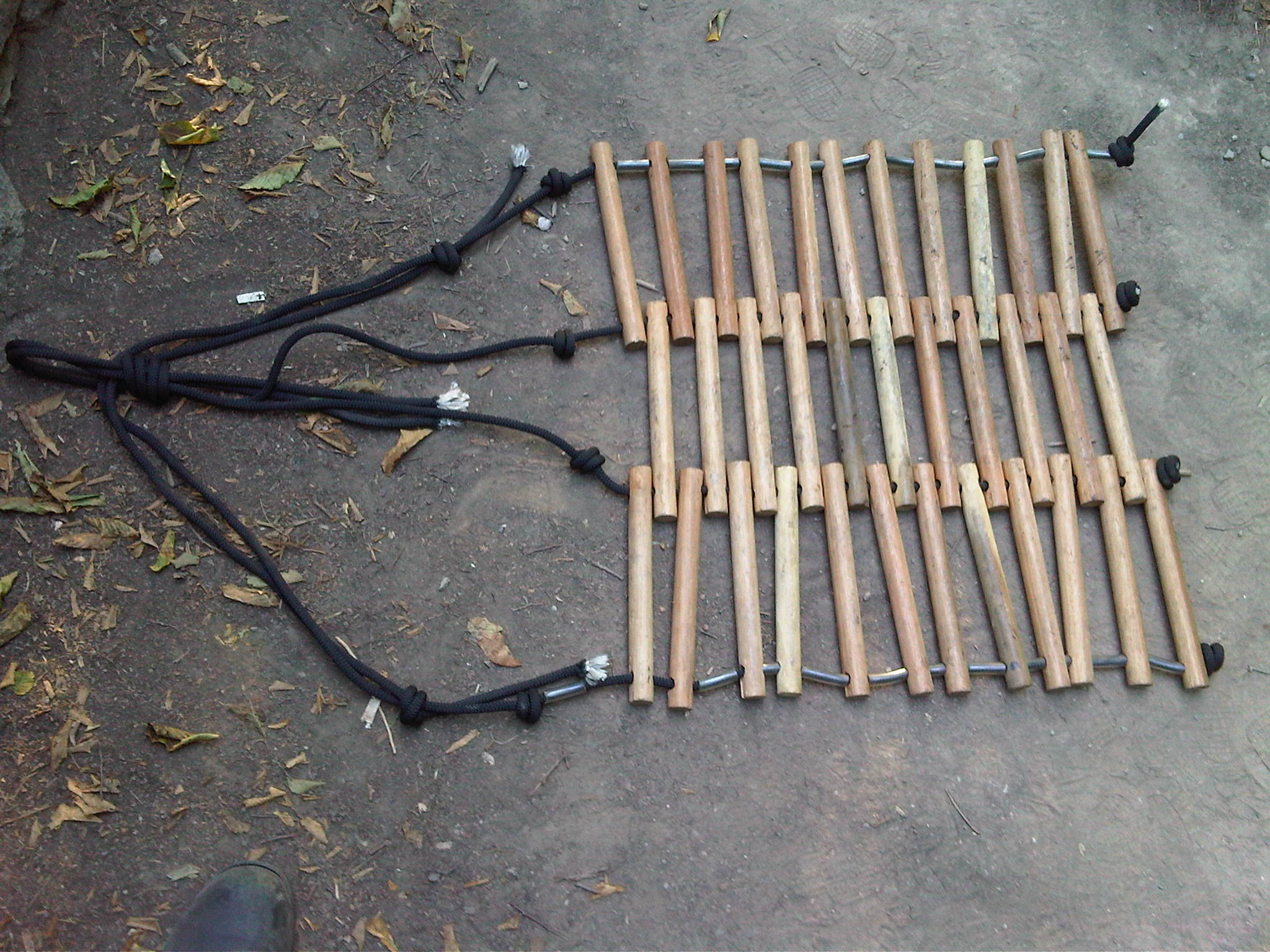
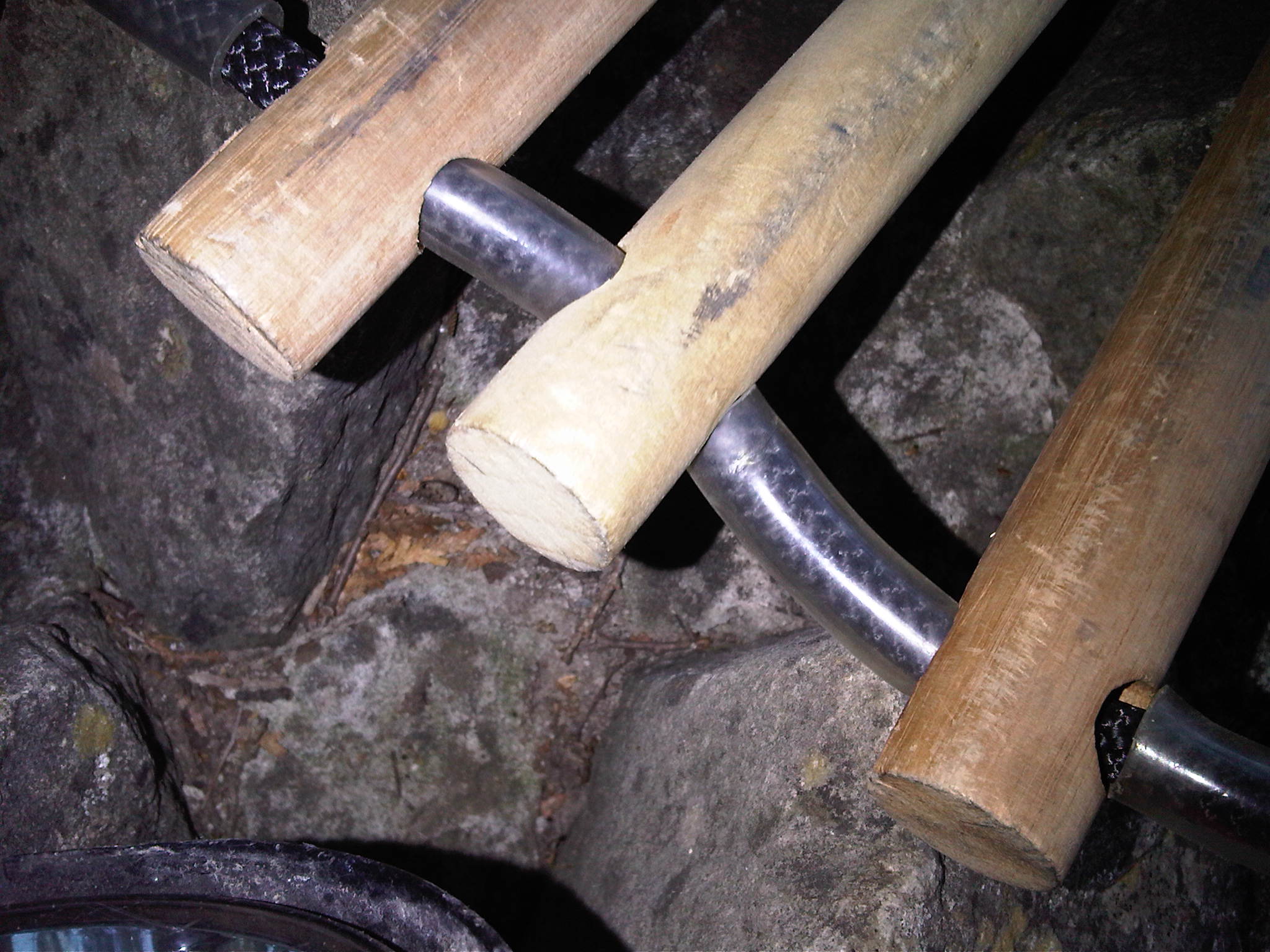
The edge protection is made using small diameter wood dowels that are strung together with some old 6 millimeter cord. The dowels are cut to length, drilled, sanded and then they are ready to be assembled. Small sections of clear water pump tube can be used as spacers on the ends to keep the dowels spaced.

caver23

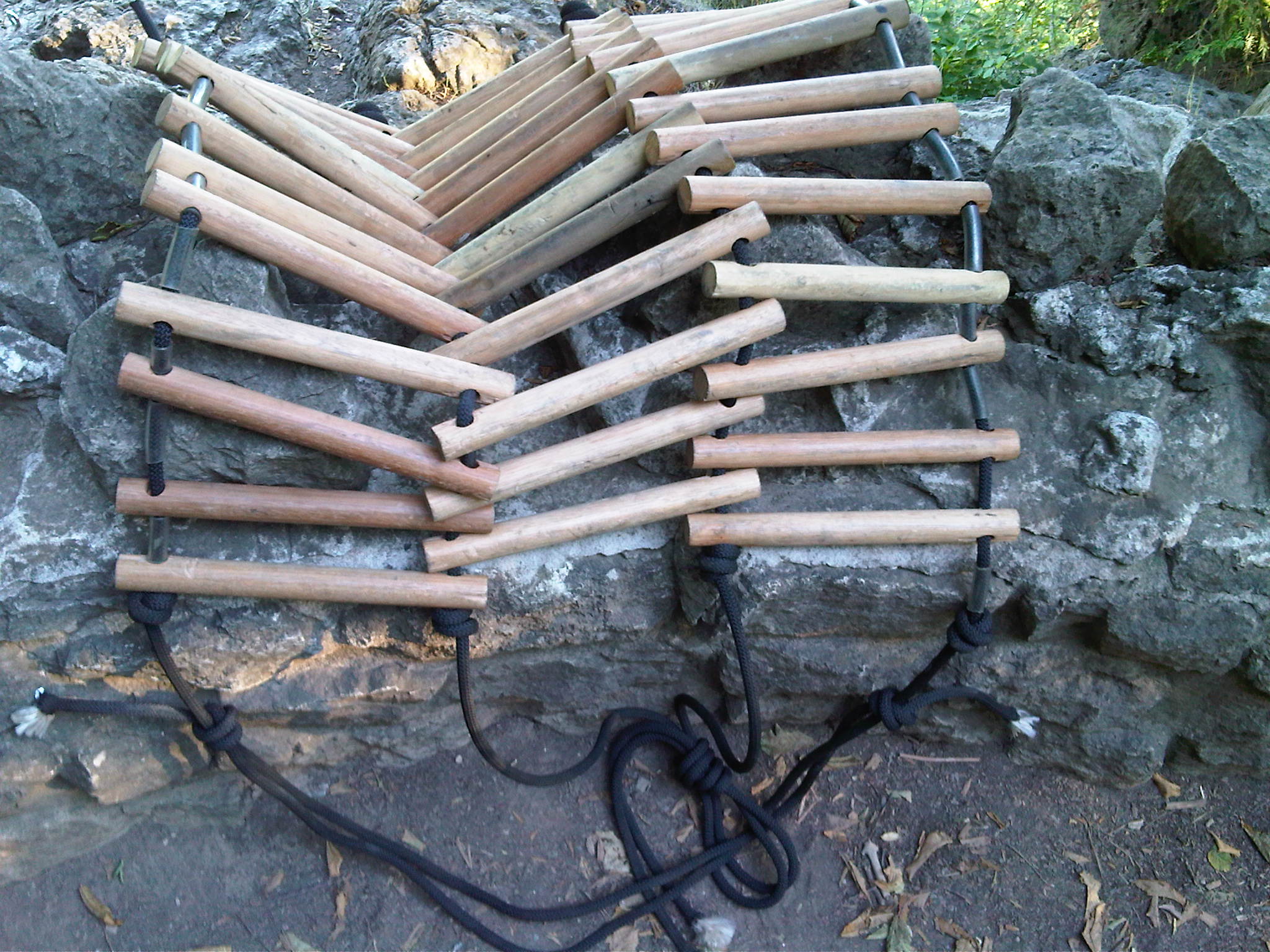
Once the edge protection has been made and it is placed on the rocks you will see how it can bend and be manipulated into the small cracks and forms to the shapes of the rocks. It makes a perfect “valley” for the rope to travel through, and you don’t have to worry about the rope wrecking your edge pro due to friction or sharp rocks.

caver1

The homemade edge pro folds up easily and is carried in our rope rescue bags, it weighs a little more then some commercially sold edge pro but I feel the extra pound is well worth the trade off.

roperescue1

The edge pro can also give you some added footing if the edge is slippery or there is the potential for loose ground. The whole edge protection cost about $20, which is well below the average cost for some edge pro.